 Save Pin
 Standing in my grandmother kitchen, watching her work magic with peaches from the backyard tree. The whole house smelled like summer and butter, and I was eight years old trying not to hover too close. She told me the secret was patience, cold hands, and never rushing the dough. Now every August I find myself reaching for peaches with that same quiet determination she had.
Last summer I made this pie during a heatwave when my kitchen was barely tolerable. The air conditioning broke, and I was sweating over the crust, convinced it would be a disaster. But when my friends came over for dinner, nobody noticed the temperature in the room. They just noticed that pie, warm from the oven, ice cream melting into every bite. Sometimes the best cooking happens when everything else is going wrong.
Ingredients
- All-purpose flour: I have learned that measuring by weight instead of volume makes such a difference in pie crust, but either way, keep your flour light and aerated before scooping
- Unsalted butter: Cold butter is non negotiable here, I have even put my butter in the freezer for 15 minutes before starting when my kitchen was running warm
- Salt: Just a pinch brings out the sweetness in ways sugar alone never can
- Granulated sugar: A little in the crust helps it brown and adds a subtle sweetness that balances the fruit
- Ice water: The water must be freezing cold, I keep a measuring cup in the freezer while I work on the dry ingredients
- Ripe peaches: They should give slightly when pressed but not feel mushy, and the aroma should hit you before you even get them home from the market
- More granulated sugar: The amount might vary depending on how sweet your peaches are, taste one first and trust your instincts
- Cornstarch: This thickens the filling without making it cloudy or affecting the flavor the way flour sometimes does
- Lemon juice: Brightens everything and prevents the peaches from turning brown while you work
- Ground cinnamon: Just enough to make people ask what that lovely flavor is without overpowering the fresh fruit
- Ground nutmeg: I use a light hand because this spice can take over if you are not careful
- Vanilla extract: Pure extract makes a difference here, imitation never quite settles into fruit fillings the same way
- Egg: Beating it with a tiny pinch of salt helps it spread more evenly
- Coarse sugar: Completely optional but that crunch on top is worth the extra step if you are feeling fancy
Tired of Takeout? 🥡
Get 10 meals you can make faster than delivery arrives. Seriously.
One email. No spam. Unsubscribe anytime.
Instructions
- Mix the dry ingredients together:
- Whisk the flour, sugar, and salt in a large bowl until they are completely combined and you cannot see any clumps of salt remaining.
- Cut in the cold butter:
- Work quickly with a pastry blender or your fingers, breaking the butter into pieces until the mixture looks like coarse crumbs with some pea sized pieces still visible.
- Add ice water gradually:
- Drizzle in the water one tablespoon at a time, tossing with a fork after each addition, until the dough holds together when you squeeze a handful.
- Shape and chill the dough:
- Divide the dough in half, press each piece into a disc about an inch thick, wrap tightly in plastic, and refrigerate for at least an hour.
- Prepare the peach filling:
- Toss the sliced peaches with sugar, cornstarch, lemon juice, cinnamon, nutmeg, salt, and vanilla until every piece is coated.
- Let the filling rest:
- Set the bowl aside for 10 minutes while you preheat the oven to 400°F and clear some counter space.
- Roll out the bottom crust:
- Flour your surface and rolling pin well, and roll one dough disc into a circle about two inches larger than your pie dish.
- Line the pie dish:
- Carefully transfer the crust to the dish, letting it settle into the corners without stretching, and trim any excess hanging over the edge.
- Add the peach filling:
- Pour the peaches into the crust and spread them evenly, mounding them slightly in the center since they will settle during baking.
- Roll out the top crust:
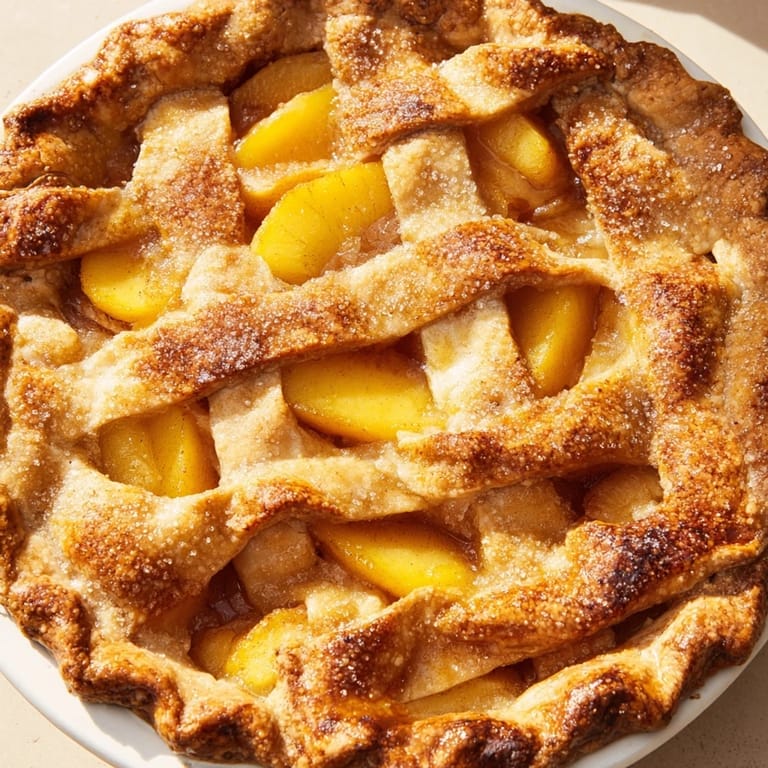
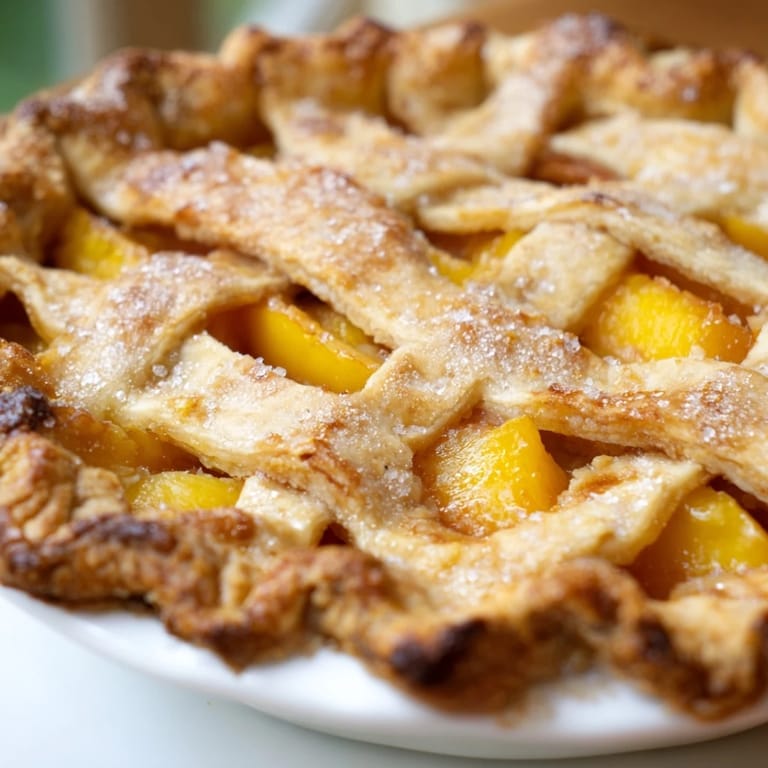
- Roll the second disc of dough into another circle and either lay it whole over the filling or cut it into strips for a lattice top.
- Seal the edges:
- Press the top and bottom crusts together, trim the excess, and crimp the edges with your fingers or a fork to make a tight seal.
- Create steam vents:
- Cut several slits in the top crust if it is a full crust, or make sure the lattice has plenty of openings for steam to escape.
- Add the egg wash:
- Brush the entire top crust with the beaten egg, being careful not to let it pool in the crimped edges.
- Sprinkle with sugar:
- If you are using coarse sugar, sprinkle it over the egg wash now while the surface is still tacky.
- Bake the pie:
- Bake at 400°F for 50 minutes, checking after 30 minutes and covering the edges with foil if they are browning too fast.
- Check for doneness:
- The crust should be golden brown and you should see the filling bubbling vigorously through the vents.
- Cool completely:
- Let the pie rest on a wire rack for at least two hours before slicing, or the filling will run everywhere.
 Save Pin
 My sister called me last week to say she had finally attempted this pie after years of being intimidated by pie crust. She sent me a photo of a slightly lopsided but golden brown pie with the caption It actually worked. That text made my whole week better than any perfectly crimped edge ever could.
Making This Pie Your Own
I have added blueberries to the filling when peaches felt a little too soft, and that combination has become a family favorite. Sometimes I skip the cinnamon and nutmeg entirely and use almond extract instead, which pairs so beautifully with stone fruit. The recipe is forgiving enough that you can follow your instincts.
Timing Is Everything
The hardest part of this recipe is waiting for the pie to cool completely. I have cut into too many warm pies and watched the filling run across the cutting board. Now I tell myself the wait is part of the process, building anticipation for that first perfect slice.
Serving Suggestions
Warm pie with vanilla ice cream is the classic for a reason, but cold pie for breakfast the next morning might be even better. The flavors have had time to meld together overnight.
- Whipped cream flavored with a little bourbon makes this feel like a dinner party dessert
- A slice of sharp cheddar alongside might sound strange but it is an old fashioned pairing that absolutely works
- Leftovers keep well at room temperature for a day, covered loosely with foil
 Save Pin
 There is something so honest about a fruit pie, nothing to hide behind, just good ingredients treated with care. I hope this one finds its way into your summer traditions.
Recipe Questions
- → Should I peel the peaches?
Peeling is recommended for the best texture. The skins can become tough during baking and may separate from the fruit. Use a sharp knife or blanch peaches briefly in boiling water to slip off skins easily.
- → How do I know when it's done?
Look for a deep golden brown crust and active bubbling through the steam vents. The filling should bubble vigorously for several minutes—this ensures the cornstarch has properly thickened the fruit juices.
- → Can I use frozen peaches?
Frozen peaches work well when fresh aren't available. Thaw completely and drain excess liquid before mixing with sugar and cornstarch. You may need to increase cornstarch slightly to account for extra moisture.
- → Why is my filling runny?
Insufficient cooling time is the most common cause. The filling needs at least two hours at room temperature to fully set. Also ensure you've measured cornstarch accurately and allowed the fruit mixture to sit before baking.
- → How should I store leftovers?
Keep at room temperature for up to two days, loosely covered with foil or plastic wrap. For longer storage, refrigerate for up to four days. The crust will soften slightly when refrigerated but rewarming in a 300°F oven helps restore crispness.
- → Can I make this ahead?
The dough can be prepared and refrigerated up to two days in advance or frozen for several weeks. You can also assemble the entire pie and refrigerate unbaked for several hours before baking—just add an extra 5-10 minutes to the baking time if chilled.