 Save Pin
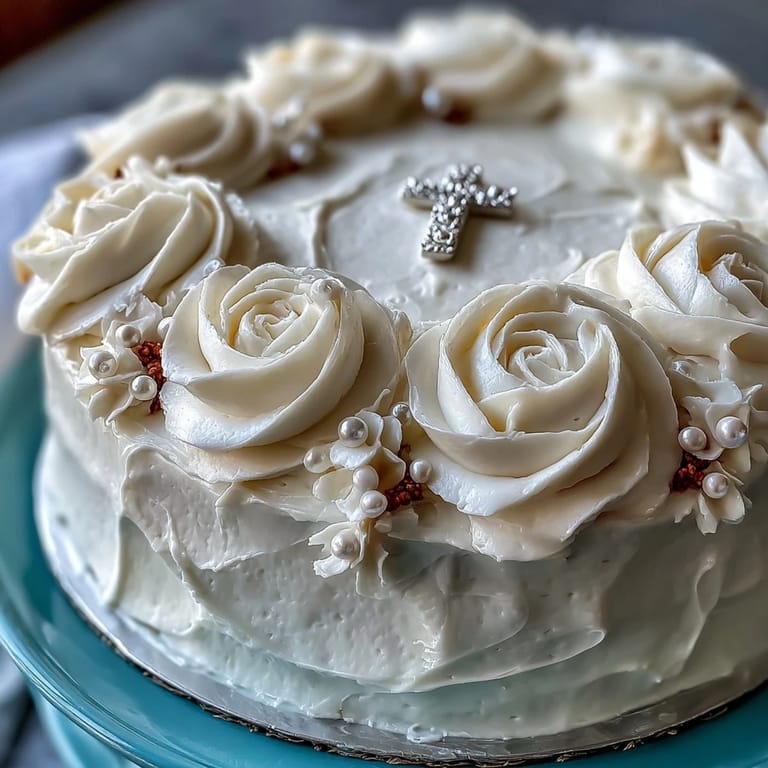
 My cousin's daughter asked me to make her First Communion cake, and I'll admit I was nervous—this wasn't just dessert, it was meant to mark something sacred. I'd watched fondant roses crumble in humidity and buttercream separate when I wasn't paying attention, but standing in my kitchen that morning with time and intention on my side, I decided this cake would be different. The vanilla sponge would be tender enough to melt on your tongue, the frosting silky and forgiving, and those white roses would look like they belonged in a church arrangement. What started as anxiety became this quiet joy of creating something worthy of the occasion.
There's something about watching a child's face when they see a cake made just for them—my cousin's daughter walked into the kitchen, gasped at the white roses, and immediately pointed to where she wanted that little cross to sit. Her siblings crowded around asking if they could help eat it, and suddenly this cake wasn't just decoration anymore; it was proof that someone cared enough to spend time making something beautiful. That moment, more than any baking technique, is why I keep making this cake.
Ingredients
- All-purpose flour: Use a good quality brand that's been stored properly—old flour can make your cake dense, and I learned that the hard way when a box had been sitting open for months.
- Baking powder: This is your insurance policy for a light, tender crumb; don't skip it or halve it thinking you're being clever.
- Unsalted butter: Room temperature is non-negotiable—cold butter won't cream properly, and you'll end up with a heavy cake that doesn't rise right.
- Granulated sugar: The creaming step is where the magic happens; don't rush those three minutes of beating butter and sugar together.
- Large eggs: Room temperature eggs incorporate smoothly without shocking the batter and causing overmixing.
- Pure vanilla extract: The real stuff makes a noticeable difference in flavor; artificial extract tastes thin and tinny by comparison.
- Whole milk: Room temperature, just like the eggs—think of it as setting yourself up for success before you even start mixing.
- Powdered sugar for buttercream: Sift it before measuring so you don't end up with grainy, lumpy frosting that looks rough under the fondant.
- White fondant: Quality matters here; cheap fondant tastes waxy and cracks easily, while good fondant rolls smooth and tastes almost pleasant.
- Cross topper: Whether you buy an edible one or use a decorative version, this becomes the focal point, so choose something that feels right for the occasion.
Tired of Takeout? 🥡
Get 10 meals you can make faster than delivery arrives. Seriously.
One email. No spam. Unsubscribe anytime.
Instructions
- Set yourself up right:
- Preheat your oven to 350°F and spend a moment properly greasing and lining those cake pans—a cake sticks when you skip this step, and then you're scraping it off the pan bottom in pieces. Room temperature ingredients aren't fussy; they're actually the secret to a cake that bakes evenly and tastes tender.
- Build the dry mixture:
- Whisk flour, baking powder, and salt together in a medium bowl and set it aside. This small step aerates the flour and distributes the leavening evenly, which means every slice rises the same way.
- Cream butter and sugar:
- Beat them together for about three minutes until the mixture looks pale, fluffy, and almost like wet sand—this incorporates air into the butter, and that air is what makes the cake light and tender. If you rush this or skip it, your cake becomes dense.
- Add eggs one by one:
- Drop each egg in after the previous one is fully incorporated, and beat well between additions. If you dump all four eggs in at once, the batter can break or become curdled looking.
- Mix in vanilla extract:
- A tablespoon goes in now, and it barely seems like enough until it bakes and fills your kitchen with the most comforting vanilla smell. This is the moment I pause and think, "this is actually happening."
- Alternate flour and milk:
- On low speed, add a third of the flour mixture, then half the milk, then half the flour, then the rest of the milk, then the final flour—beginning and ending with flour matters because it keeps the batter stable. Mix until just combined; overmixing develops gluten and toughens the cake.
- Fill the pans:
- Divide batter evenly between your prepared pans and smooth the tops with an offset spatula. If one layer is higher than the other, the cake will bake unevenly and look lopsided on the plate.
- Bake with patience:
- Bake for 30 to 35 minutes until a toothpick poked in the center comes out clean or with just a crumb or two clinging to it. The cakes should smell vanilla-sweet and feel springy when you gently press the top.
- Cool properly:
- Let cakes rest in their pans for 10 minutes—this sounds short, but it lets them set enough to turn out without crumbling. Then turn them out onto wire racks to cool completely, which takes about an hour; frosting a warm cake is a sticky disaster.
- Make the buttercream:
- Beat softened butter until it's creamy and pale, then gradually add sifted powdered sugar a bit at a time, vanilla extract, and a pinch of salt. Add milk or cream one tablespoon at a time until you reach a consistency that's spreadable but still holds its shape.
- Level and layer:
- If your cake layers have domed tops, use a serrated knife or cake leveler to trim them flat—this is how you get a stable, even cake that doesn't slide sideways. Place one layer on your cake board, spread a generous layer of buttercream on top, and set the second layer down gently.
- Apply the crumb coat:
- Spread a thin layer of buttercream all over the entire cake to seal in crumbs, then refrigerate for 20 minutes until it firms up. This step feels like extra work but it's actually a lifesaver because it prevents crumbs from mixing into your final frosting layer.
- Finish with frosting:
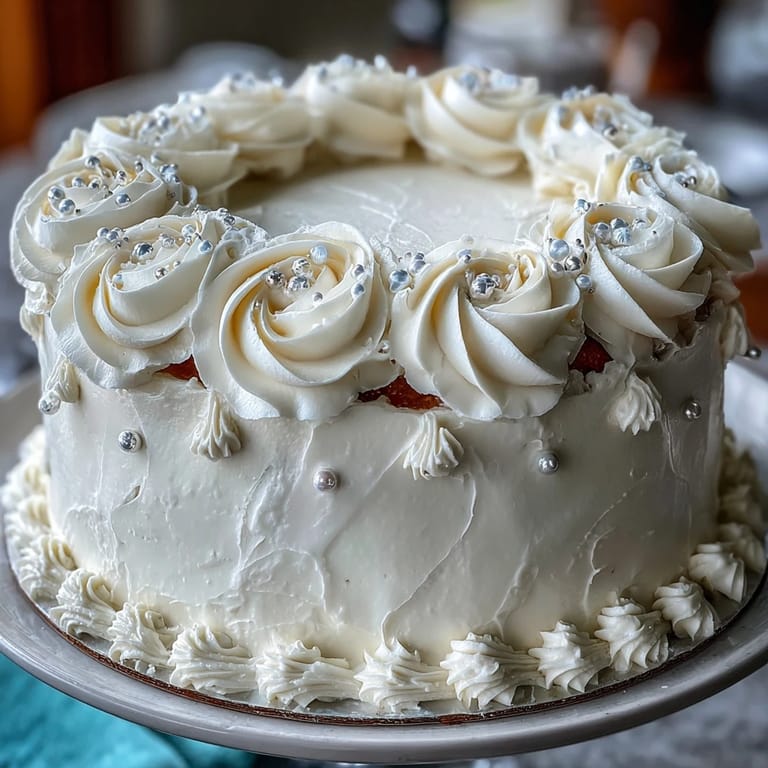
- Apply a final, smooth layer of buttercream over the crumb coat, and take your time here—a smooth base makes the fondant roses look even more elegant. Use an offset spatula dipped in warm water to smooth out any swirls if you like.
- Craft fondant roses:
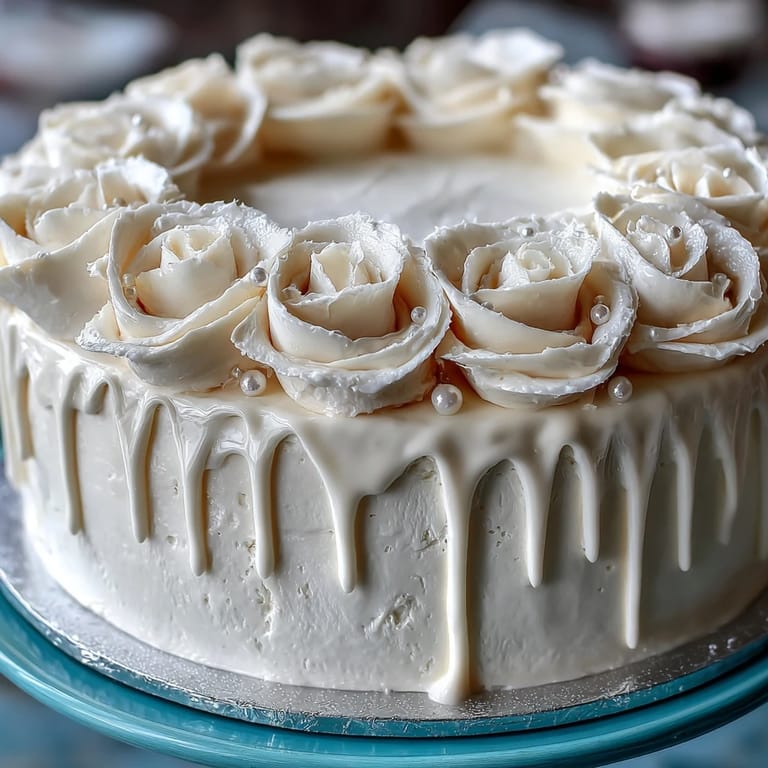
- Roll out white fondant to about 1/8-inch thickness and cut small circles, then flatten each circle, roll it into a small cone shape for the center, and wrap flattened petals around it to create a rose. This is meditative work, honestly—the fondant warms in your hands and becomes almost clay-like, and before you know it you have a whole bouquet of roses.
- Shape fondant leaves:
- If you're adding greenery, tint a small portion of fondant with green gel color and shape simple oval leaves by hand or with a small knife. Fresh fondant leaves look more realistic than perfectly uniform ones, so don't worry about making them identical.
- Decorate the cake:
- Arrange your fondant roses and leaves on the frosted cake in whatever pattern feels right—some people do a cluster on top, others arrange them around the sides. Add edible pearls or silver dragees between the roses if you want extra elegance.
- Crown with the cross:
- Place your cross topper at the center top of the cake or wherever feels balanced and meaningful. Step back and look at it; this is the moment it stops being a project and becomes a cake worthy of the occasion.
- Chill before serving:
- Refrigerate the finished cake until you're ready to serve it—this firms up everything, makes it easier to slice cleanly, and gives the flavors time to meld together. A cold slice of this cake is elegant and tender all at once.
 Save Pin
 After the cake was decorated and sitting in the refrigerator, I found myself standing in front of it in the quiet of my kitchen, looking at those white roses and that small cross on top. It felt like making this cake was its own kind of ritual—choosing quality ingredients, taking time with each step, and creating something beautiful for an important moment in someone else's life. That's when baking stops being about following instructions and becomes something closer to love.
Why Temperature Matters More Than You Think
I used to ignore the "room temperature" instructions because I thought it was overthinking, but then I started noticing the difference in my cakes. Room temperature butter creams into sugar more thoroughly, incorporating air that makes the finished cake light and tender instead of dense and heavy. Room temperature eggs blend smoothly into the batter instead of creating little pockets of cooked egg white, which can happen if a cold egg hits hot creamed butter. Room temperature milk doesn't shock the batter by being too cold, which can cause the emulsion to break and leave you with a separated, curdled-looking mixture that bakes into a tough cake. It's not fussy; it's actually smart baking.
The Fondant Rose Technique Is Easier Than It Looks
The first time someone asked me to make fondant roses, I panicked and watched three different YouTube videos, convinced I was missing some secret. Then I just started rolling fondant and realized there's no secret—you roll small balls, flatten them into petals, and wrap them around each other, and somehow your hands know what to do. The fondant warms up and becomes pliable, and each rose ends up slightly different, which actually makes them look more natural than if they were all perfectly uniform. If a petal tears or doesn't look right, just smooth it back together and keep going; fondant is forgiving that way.
Frosting Consistency Is Your Best Friend
The buttercream in this recipe is thick enough to hold decorations but soft enough to spread without tearing the cake layers—that balance took me time to understand. If your frosting is too stiff, you'll gouge the cake trying to spread it; too soft and it won't support the weight of the roses or look smooth and elegant. The milk or cream at the end is how you fine-tune it, adding one tablespoon at a time and beating it in until you reach that sweet spot where it's creamy but holds its shape.
- If your buttercream ends up too soft, refrigerate it for 15 minutes and it'll firm right up.
- If it's too stiff, warm a metal spatula under hot water and use it to smooth out the frosting on the cake.
- A stand mixer with a paddle attachment is genuinely worth using here because hand-beating powdered sugar gets tiring and doesn't incorporate it as smoothly.
 Save Pin
 This cake exists at the intersection of elegant and achievable, and that's exactly why it keeps finding its way onto celebration tables. Make it with care, and it becomes a memory in itself.
Recipe Questions
- → How do I achieve a moist vanilla sponge?
Ensure ingredients are at room temperature and avoid overmixing the batter. Alternate adding dry ingredients and milk gently for even texture.
- → What’s the best way to make smooth buttercream frosting?
Beat softened butter until creamy before gradually adding sifted powdered sugar and vanilla. Add milk or cream slowly to reach desired consistency.
- → How can I shape the fondant roses effectively?
Roll small fondant balls, flatten, and carefully shape each petal, layering them to form realistic roses. Tint a bit with green for leaves if desired.
- → Can I prepare the cake decorations in advance?
Yes, fondant roses and leaves can be crafted ahead and stored in an airtight container. Apply them to the cake shortly before serving for best appearance.
- → What alternatives can I use for a lighter texture?
Substituting half the butter in the sponge with vegetable oil offers a lighter crumb without sacrificing moisture and flavor.