 Save Pin
 A friend handed me a steaming bowl of this soup on a rainy Bangkok evening, and I watched her eyes close in satisfaction with that first spoonful. The aroma alone—lemongrass, galangal, and lime dancing together—told me this was something special, something that felt both comforting and exotic at once. I spent the next hour pestering her for the recipe, and she finally laughed and wrote it down on a napkin. Years later, I've made it dozens of times, each batch teaching me something new about balance and patience.
I made this for my sister during her first week working nights at the hospital, and she sat at my kitchen counter in her scrubs, just quietly spooning through bowl after bowl. She didn't say much, but when she finally looked up, there were tears in her eyes—not from the chilies, but from the feeling of being taken care of. That's when I realized this soup does something beyond nourishing; it's a small act of love that actually tastes incredible.
Ingredients
- Boneless, skinless chicken breast or thighs (300 g): Thighs hold more flavor and stay tender longer, but breast works if that's what you have—just don't overcook it.
- Coconut cream (400 ml): This is the soul of the soup; buy full-fat canned coconut cream, not lite, and shake the can well before opening.
- Chicken stock (500 ml): Homemade is ideal, but good quality store-bought works—taste it first to make sure it's not oversalted.
- Lemongrass stalks (2): Bruise them by smashing with the side of your knife to release the oils; this step is worth the extra 30 seconds.
- Fresh galangal (4 slices): If you can't find it, ginger is an acceptable substitute, though the flavor will be slightly warmer than authentic.
- Kaffir lime leaves (4): These are non-negotiable if you can find them—they add a brightness that nothing else can replicate, so check Asian markets or order online.
- Button mushrooms (200 g): Slice them evenly so they cook at the same rate; cremini mushrooms add earthier depth if you prefer.
- Shallots (2 small): They soften completely into the broth, adding sweetness without any bite.
- Garlic (2 cloves): Smash them with the side of your knife rather than mincing—they'll be easier to remove and infuse more flavor.
- Thai bird's eye chilies (2–3): Smash them whole and leave seeds in if you love heat; remove the seeds for gentler spice.
- Fish sauce (2 tbsp): Yes, it smells pungent, but trust the process—it's the umami backbone that makes everything sing.
- Lime juice (1 tbsp plus extra): Fresh lime is essential; bottled will flatten the soup's brightness.
- Sugar (1 tsp): A tiny bit rounds out the flavors and balances the heat and sourness.
Tired of Takeout? 🥡
Get 10 meals you can make faster than delivery arrives. Seriously.
One email. No spam. Unsubscribe anytime.
Instructions
- Build your aromatics foundation:
- Pour the coconut cream and chicken stock into a large saucepan and add the bruised lemongrass, galangal slices, torn lime leaves, sliced shallots, smashed garlic, and chilies. Bring everything to a gentle simmer over medium heat—you want small, lazy bubbles, not a rolling boil that will cloud the broth.
- Let the flavors meld:
- Keep the heat steady and let it simmer undisturbed for 10 minutes; this is when all those aromatics start whispering their secrets into the liquid. Your kitchen will smell like a Thai market, and that's exactly right.
- Cook the chicken and mushrooms:
- Add your thinly sliced chicken and the mushroom slices to the pot, giving everything a gentle stir. Simmer for 8–10 minutes until the chicken is no longer pink inside and the mushrooms have softened and absorbed some of that golden broth.
- Strain out the solids:
- Using a slotted spoon or small strainer, carefully remove and discard the lemongrass stalks, galangal pieces, and lime leaves. You can leave tiny bits of shallot and garlic if they've mostly dissolved—they add texture.
- Season to perfection:
- Stir in the fish sauce, fresh lime juice, and sugar, then taste. This is your moment to adjust—more lime if it needs brightness, a touch more fish sauce if it feels flat, an extra pinch of salt if needed. Taste again, then taste once more.
- Serve with intention:
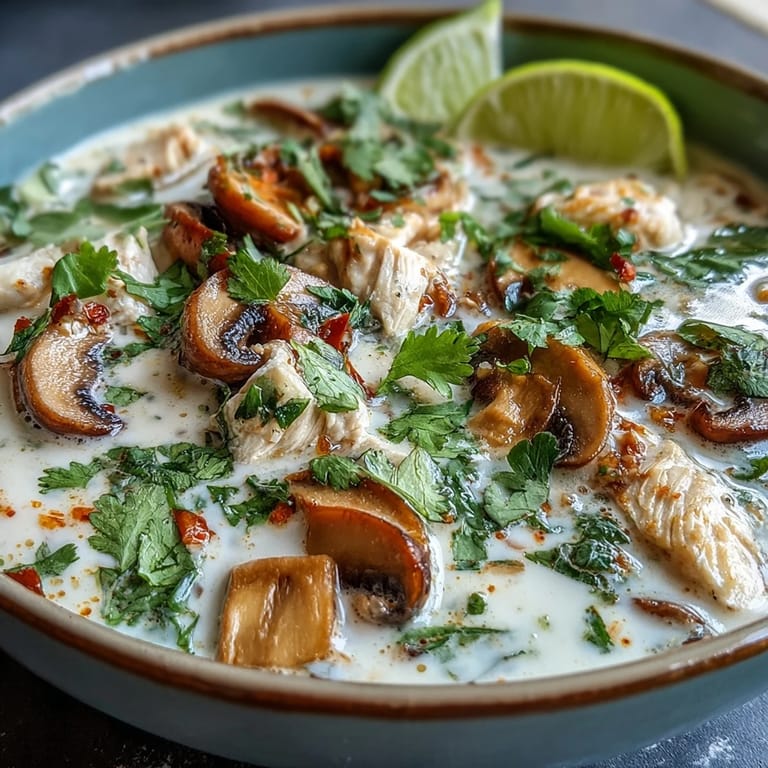
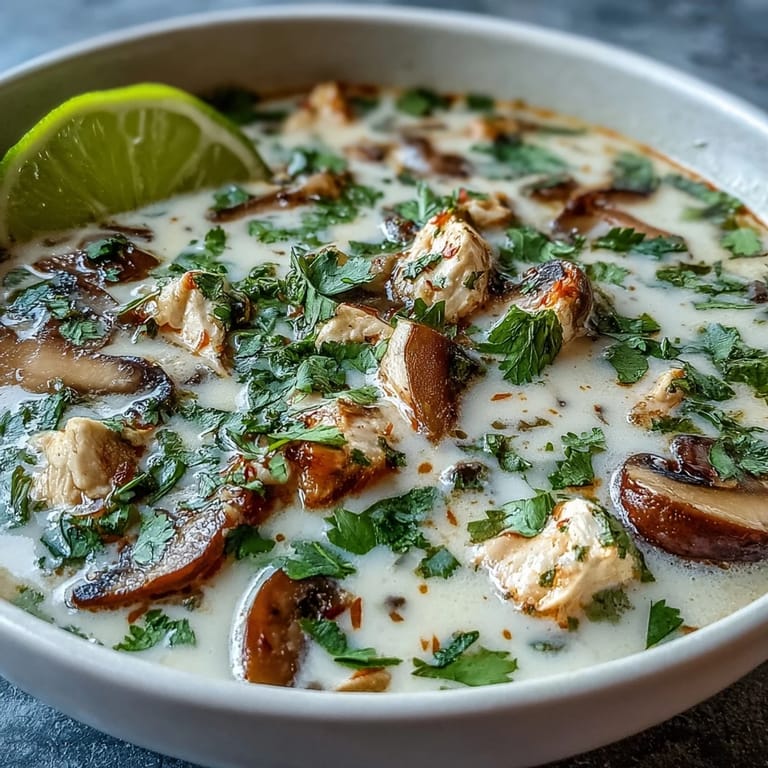
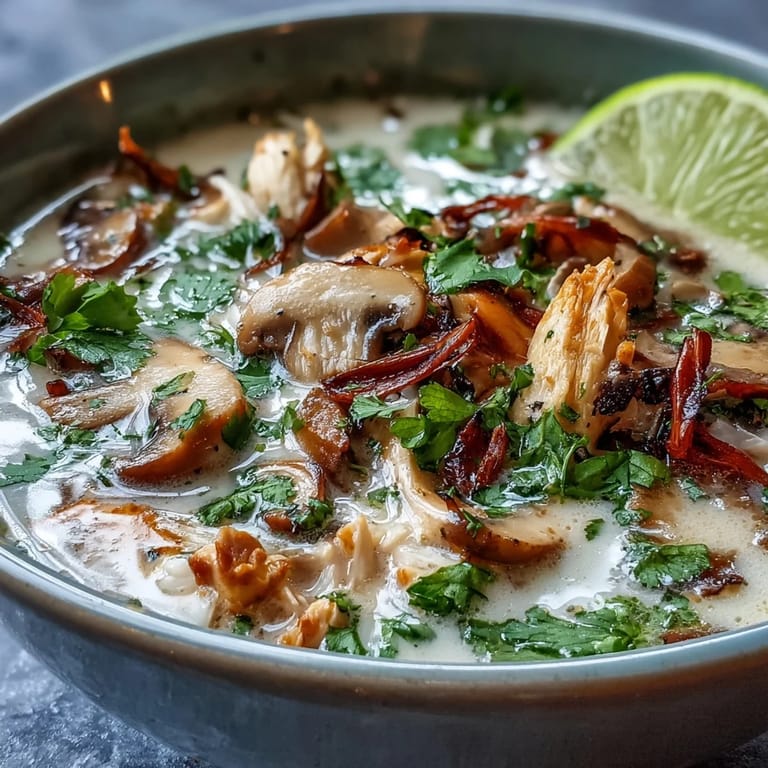
- Ladle the soup into bowls while it's still steaming, scatter fresh cilantro over the top, and set a lime wedge on the rim. Encourage everyone to squeeze that lime in just before eating.
 Save Pin
 My partner walked through the door one evening to find me standing over a pot with my eyes closed, just breathing in. When I opened them, he laughed and said he could smell his way home from three blocks away. That's the magic of this soup—it announces itself before you even taste it, and somehow that generosity of aroma makes the first spoonful feel earned and sacred.
Why the Aromatics Matter Most
The heart of Tom Kha is built on layers of fragrance rather than complicated technique. Lemongrass brings a citrusy whisper, galangal adds a peppery warmth, and kaffir lime leaves contribute a haunting floral note that elevates everything around them. When these three work together in a simmering broth, they transform simple chicken and mushrooms into something that tastes like it took hours. I learned this the hard way when I once tried to rush by adding everything at the end—the soup was flat and one-dimensional, missing that complexity that makes you wonder what you're tasting.
Balancing Heat and Brightness
Thai cooking is about harmony, and this soup teaches you that lesson immediately. The chilies bring fire, but they're meant to be balanced by the lime's brightness, softened by coconut's creaminess, and grounded by fish sauce's umami. If your first taste feels too hot, don't panic—squeeze in more lime or add a splash more stock. If it feels dull, a tiny bit more fish sauce usually wakes it up. I've learned that the best version of this soup is the one that tastes right to your palate, not the one that follows the recipe exactly.
Serving Suggestions and Variations
Serve this soup on its own for a light meal, or pair it with jasmine rice for something more substantial. I've made it with tofu for vegetarian friends by using soy sauce instead of fish sauce and adding a bit of soy sauce to the broth for that savory depth. Some evenings I add a handful of baby spinach or bok choy at the very end, letting it wilt into the warm broth. Here are the final touches that transform a good soup into a moment worth remembering:
- Always have extra lime wedges at the table—people love adjusting the brightness to their preference.
- Fresh cilantro should be scattered generously, not sparingly; it adds a clean, finishing note that feels intentional.
- Serve it in bowls that have been warmed, and don't let it sit too long before eating—it's best when the steam is still rising.
 Save Pin
 This soup has become my go-to when I want to cook something that feels special without the stress, and more importantly, it's taught me that the best meals are the ones where people pause and actually taste what's in front of them. Make this when you want to slow down.
Recipe Questions
- → Can I make this soup ahead of time?
Yes, Tom Kha Soup stores well in the refrigerator for up to 3 days. The flavors actually deepen overnight. Reheat gently over low heat and add fresh lime juice and cilantro just before serving for the brightest flavor.
- → What can I substitute for galangal?
Fresh ginger works as a substitute, though galangal has a unique citrusy, piney flavor. Use slightly less ginger as it's more pungent. For the most authentic taste, look for galangal in Asian markets or use frozen galangal slices.
- → How do I make this vegetarian?
Replace chicken with firm tofu or additional vegetables like bok choy and bell peppers. Swap fish sauce for soy sauce or tamari, and use vegetable stock instead of chicken stock. The coconut and aromatics still deliver incredible depth.
- → Why remove the lemongrass and galangal?
These aromatics are fibrous and not meant to be eaten. They infuse the broth with flavor during cooking but should be discarded before serving. Bruising them releases more essential oils into the soup.
- → Can I use coconut milk instead of coconut cream?
Absolutely. Coconut milk creates a lighter, less rich soup while coconut cream offers luxurious thickness. You can also use a combination of both for a balanced texture that's creamy but not too heavy.
- → How spicy is this soup?
The spice level is adjustable. Start with 1-2 chilies for mild heat or omit them entirely for a gentle version. Thai bird's eye chilies pack heat, so add gradually and taste as you go. The coconut cream helps temper the spice.