 Save Pin
 There's something almost meditative about the moment when chickpeas hit hot oil and start their transformation into crispy little flavor bombs. I stumbled onto this bowl during a phase where I was trying to eat more intentionally without sacrificing satisfaction, and it completely changed how I think about vegetarian cooking. The combination of that creamy peanut sauce with the contrast of roasted, crunchy chickpeas felt like discovering a secret that had been hiding in my pantry all along. What started as an experiment became the meal I crave on days when I need both nourishment and comfort. Now I find myself making it on repeat, tweaking it slightly each time depending on what's in my crisper drawer.
I made this for a friend who'd just gone vegetarian and was convinced she'd be eating sad salads forever. Watching her face when she tasted it—the way she immediately reached for seconds and asked for the recipe before even finishing her first bowl—reminded me that good food has nothing to do with restriction and everything to do with intention. That moment sealed it: this wasn't just my weeknight dinner, it was going to become her go-to meal too.
Ingredients
- Chickpeas (2 cans, drained and rinsed): Canned chickpeas are a lifesaver because you're not waiting an hour for them to cook, plus the starch they've been packed in actually helps them get crispier in the oven if you dry them really well first.
- Olive oil (1 tbsp): Don't skimp here—good quality oil makes a real difference in how the chickpeas crisp up and how they taste.
- Smoked paprika, cumin, garlic powder, salt, pepper: This spice blend is your secret weapon; the smoked paprika especially gives that roasted depth that makes people ask what your secret ingredient is.
- Brown rice or quinoa (2 cups cooked): Brown rice is more forgiving if you're learning, but quinoa has a nuttiness that pairs beautifully with the peanut sauce.
- Red cabbage (1 cup shredded): The crunch is non-negotiable, and the color makes the bowl look alive; I learned the hard way that pre-shredded cabbage can get wet and limp, so slice it fresh if you can.
- Carrots, cucumber, cherry tomatoes, edamame: These are your freshness anchors—choose whatever's crisp and bright at the market, because that's what matters.
- Fresh cilantro (1/4 cup chopped): A handful scattered on top brings everything into focus at the last moment.
- Creamy peanut butter (1/3 cup): Use the kind without added oils if you want the sauce to be thick and luxurious; the cheaper stuff that separates actually works fine here.
- Soy sauce (2 tbsp): This is where umami lives; tamari if you're gluten-free, but don't skip it thinking salt will do the same thing.
- Maple syrup or honey (1 tbsp): Just enough sweetness to balance the saltiness and make the sauce craveable without being dessert.
- Rice vinegar (1 tbsp): The brightness this brings is what keeps the sauce from feeling heavy; I once tried lime juice instead and it was too sharp, so stick with rice vinegar.
- Sriracha or chili sauce (1 tsp, optional): Start with less if you're unsure about heat, because it builds as it sits.
- Garlic (1 clove, minced): Fresh minced garlic makes the sauce sing; jarred is fine in a pinch but doesn't have the same punch.
- Warm water (2–4 tbsp): This is your adjustment tool for sauce consistency—add it slowly and taste as you go.
- Roasted peanuts and sesame seeds (toppings): These finish the bowl with texture and richness that elevate it from simple to special.
- Lime wedges: The squeeze of lime at the end is what makes people lean back and say yes to this bowl.
Tired of Takeout? 🥡
Get 10 meals you can make faster than delivery arrives. Seriously.
One email. No spam. Unsubscribe anytime.
Instructions
- Heat your oven and prepare:
- Set your oven to 425°F and line a baking sheet with parchment paper so cleanup later is effortless. This high heat is what transforms chickpeas from soft to crackling.
- Season and roast the chickpeas:
- Toss your drained chickpeas with olive oil and all those spices—I do this right in the bowl I'm going to roast them in because why make extra dishes. Spread them out on your baking sheet in a single layer and let them roast for 20–25 minutes, shaking the pan halfway through, until they're golden on the outside and you can hear them rattling in the pan.
- Make the sauce while things cook:
- Whisk together peanut butter, soy sauce, maple syrup, rice vinegar, sriracha if you want heat, and minced garlic in a bowl. Start with 2 tablespoons of warm water and whisk until smooth, adding more water a tablespoon at a time until you get a consistency that drizzles easily but isn't thin like soup.
- Get your components ready:
- If your grain isn't cooked yet, get it going now. While that's happening, slice and chop your vegetables so everything's prepped and waiting—shred that cabbage, julienne those carrots, halve your tomatoes, and keep the cilantro separate until the very end.
- Build your bowls:
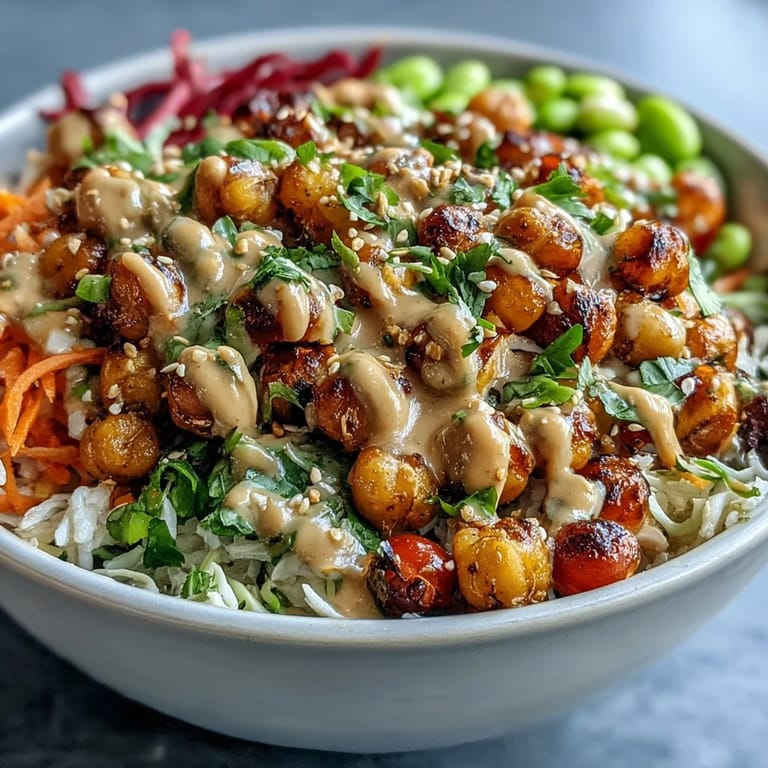
- Divide your cooked grain among four bowls as your base, then arrange the roasted chickpeas, cabbage, carrots, cucumber, tomatoes, edamame, and fresh cilantro on top in whatever pattern makes you happy. This is where the bowl goes from looking like lunch to looking like something you'd order at a restaurant.
- Finish with sauce and toppings:
- Drizzle that peanut sauce generously over everything—don't hold back, it's what ties the whole thing together. Sprinkle chopped peanuts and sesame seeds on top, add a lime wedge on the side, and serve immediately so the vegetables are still crisp and the chickpeas haven't lost their crunch.
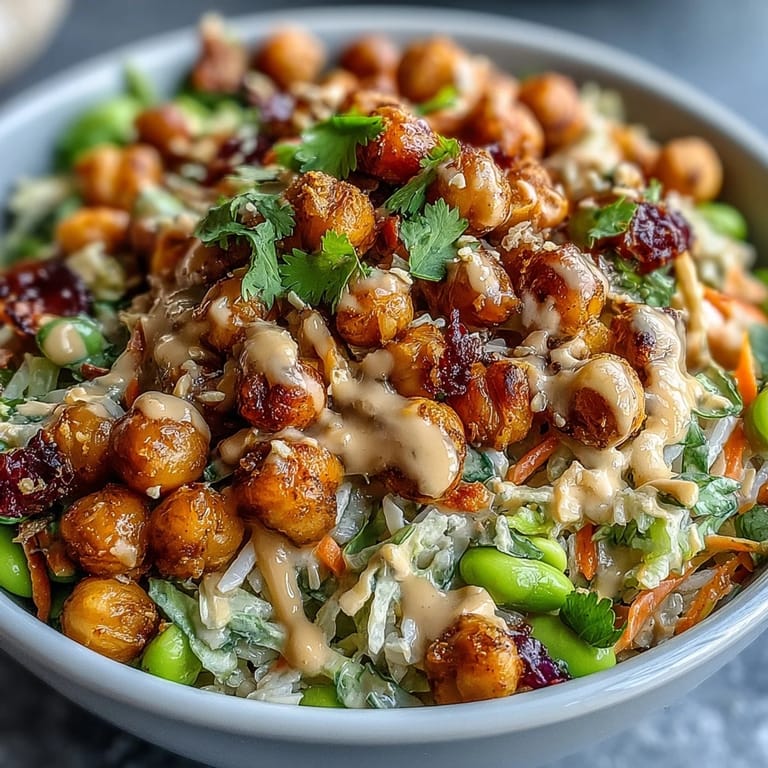 Save Pin
 There was a Tuesday evening when I made this bowl for myself after a long day, and instead of eating it standing up at the counter like I usually do, I actually sat down with a real plate. I remembered why food matters—it's not just fuel, it's a moment where you tell yourself you're worth the effort. That's what this bowl does for me now.
Why This Bowl Became My Protein Answer
For years I thought protein bowls had to be built around chicken or fish, and then I realized that was just habit, not truth. This combination of chickpeas and edamame actually hits just as hard nutritionally, and somehow tastes better because every single element chose to be here rather than being the default. The 17 grams of protein per bowl keeps you steady through an afternoon without that sluggish feeling you get from heavy meat-based options.
The Peanut Sauce That Changes Everything
I've made this sauce enough times now that I can practically do it with my eyes closed, and that's the sign of a truly good recipe—it becomes muscle memory. The ratio of salt to sweet to acid is so balanced that it makes every single vegetable taste better, like it's amplifying flavors that were already there but hiding. Once you understand how this sauce works, you'll start using it on other things too: rice bowls, vegetable stir-fries, even as a dipping sauce for summer rolls.
Building Flexibility Into Your Bowl
One of the reasons this recipe has stuck in my rotation is that it's forgiving in the best way—you can swap vegetables based on season or what's looking good at the market without changing the soul of the dish. In winter I add roasted broccoli or Brussels sprouts, in summer I throw in snap peas and radishes, and nobody's complaining because the chickpeas and sauce are the actual stars. Think of this as a framework rather than a prescription, and you'll find yourself making it all the time because it never gets boring.
- Greens are your secret weapon: Toss in fresh spinach or massaged kale under the grain layer and it becomes a full vegetable situation that nobody will question.
- Grain swaps work seamlessly: Use cauliflower rice for low-carb, white rice if that's what you have, or even skip grains entirely and make it a pure vegetable situation.
- The sauce is flexible too: If you don't have rice vinegar, use lime juice; if you're out of maple syrup, honey works just fine; adjust the heat however you like it and make it yours.
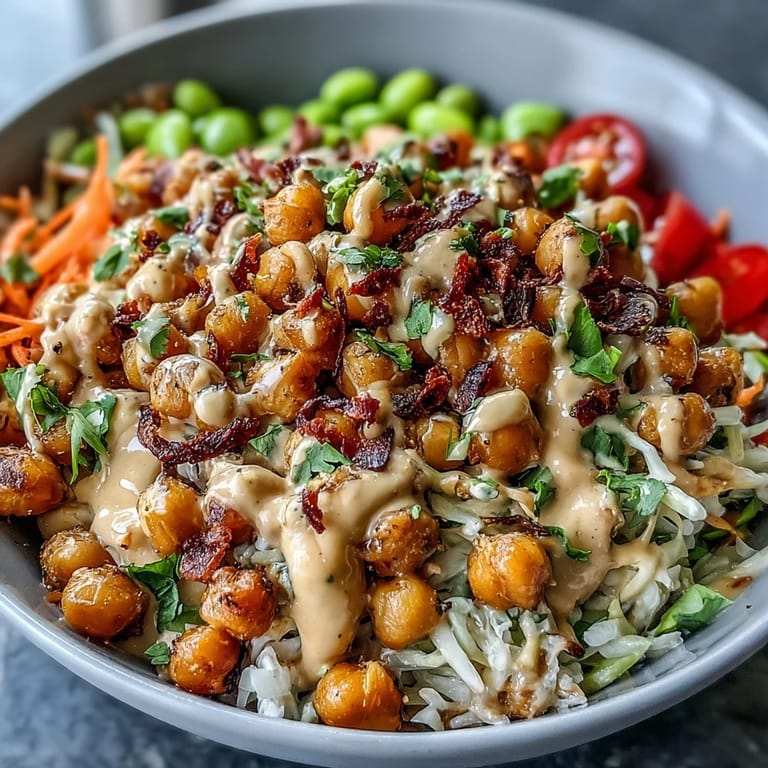 Save Pin
 This bowl has become my answer to the question I used to ask myself every afternoon: what do I actually want to eat? It satisfies the part of me that wants something crunchy and fresh and alive, while taking care of the part that needs real sustenance. That's the recipe I keep coming back to.
Recipe Questions
- → Can I make this bowl ahead of time?
Yes, prepare components in advance. Roast chickpeas and store up to 3 days. Chop vegetables and cook grains ahead. Keep sauce separate and drizzle just before serving for best texture.
- → What can I substitute for peanut butter?
Almond butter, cashew butter, or sunflower seed butter work well. Tahini creates a lighter, nuttier version. Adjust sweetener slightly depending on the butter's natural sweetness.
- → How do I make this bowl gluten-free?
Use tamari instead of soy sauce. Verify all packaged ingredients are certified gluten-free. Brown rice and quinoa are naturally gluten-free grain options.
- → Can I add more protein?
Increase chickpeas to 3 cans, add more edamame, or include grilled tofu, tempeh, or baked chicken. Hemp seeds or pumpkin seeds make great protein-rich toppings too.
- → How long does the peanut sauce keep?
Store in an airtight container in the refrigerator for up to one week. The sauce may thicken—thin with warm water and stir well before using.
- → What other vegetables work in this bowl?
Try bell peppers, shredded kale, spinach, roasted sweet potato, steamed broccoli, cauliflower florets, or shredded beets. Use what's seasonal and available.