 Save Pin
 I discovered tom kha gai on a sweltering Bangkok afternoon, sitting at a plastic stool outside a tiny shophouse while rain hammered the metal roof. The vendor handed me a steaming bowl, and one spoonful transported me completely—coconut so creamy it coated my tongue, then a bright hit of lime that made my eyes water in the best way. Years later, I still chase that exact balance of comfort and complexity whenever I make it at home.
I made this for a friend who'd never had Thai food, and watching her face light up on that first spoonful felt like introducing her to an old secret. She kept asking what the mysterious creamy element was, shocked when I told her it was just coconut milk doing its magic. Now she texts me at midnight asking for the recipe again.
Ingredients
- Chicken broth: Use homemade if you have it—the depth of flavor makes a real difference, though good quality store-bought works when life is busy.
- Lemongrass: This is non-negotiable; it's the soul of the soup, so trim away the dried outer layers and smash it hard to release those oils.
- Fresh galangal: Don't skip it for regular ginger if you can help it—galangal has a peppery, almost piney note that ginger simply can't replicate, and it's worth hunting down at an Asian market.
- Makrut lime leaves: Tear them as you add them so the fragrance wakes up the entire pot; their citrus bite is what makes this soup sing.
- Thai bird's eye chilies: Start with two if you're heat-shy; you can always add more, but you can't take back the fire.
- Chicken thighs: Slice them thin so they cook through quickly and stay tender in the creamy broth, unlike chicken breast which can turn stringy.
- Full-fat coconut milk: The real stuff, not lite—this is where all that silky richness comes from, so don't compromise.
- Fresh mushrooms: Straw mushrooms are ideal if you find them, but cremini or even oyster mushrooms work beautifully and add earthiness.
- Fish sauce: It smells pungent on its own, but trust it; it's the secret backbone that makes everything taste more like itself.
- Palm sugar: A tiny pinch rounds out the flavors and tames the heat slightly; brown sugar works if that's what you have.
- Lime juice: Fresh squeezed, always; the acidity is the final flourish that brightens everything.
- Fresh cilantro and green onions: These aren't just garnish—they add a fresh snap that balances the richness.
Tired of Takeout? 🥡
Get 10 meals you can make faster than delivery arrives. Seriously.
One email. No spam. Unsubscribe anytime.
Instructions
- Build the aromatic base:
- Pour your broth into a medium pot and let it warm over medium heat, then add the smashed lemongrass, galangal slices, torn lime leaves, and crushed chilies all at once. The kitchen will smell incredible within seconds—let it simmer for 5 to 7 minutes so the broth absorbs all that fragrance and develops depth.
- Introduce the chicken:
- Add your thinly sliced chicken thighs and the shallot to the simmering broth, stirring occasionally so the chicken poaches gently and turns opaque in about 3 to 4 minutes. This is when you know the base is working because the broth starts turning slightly milky from the chicken's natural proteins.
- Bring in the creaminess:
- Toss in the mushroom slices and pour the entire can of coconut milk into the pot, stirring gently to combine everything without breaking up the mushrooms. Bring it back to a gentle simmer, keeping the heat moderate—vigorous boiling will make the coconut milk break and curdle, which you want to avoid.
- Season to perfection:
- Splash in the fish sauce, a squeeze of lime juice, and just a pinch of palm sugar, then taste a spoonful and adjust as you go. The balance should feel salty, bright, and ever so slightly sweet all at once, with no single note overpowering the others.
- Finish and serve:
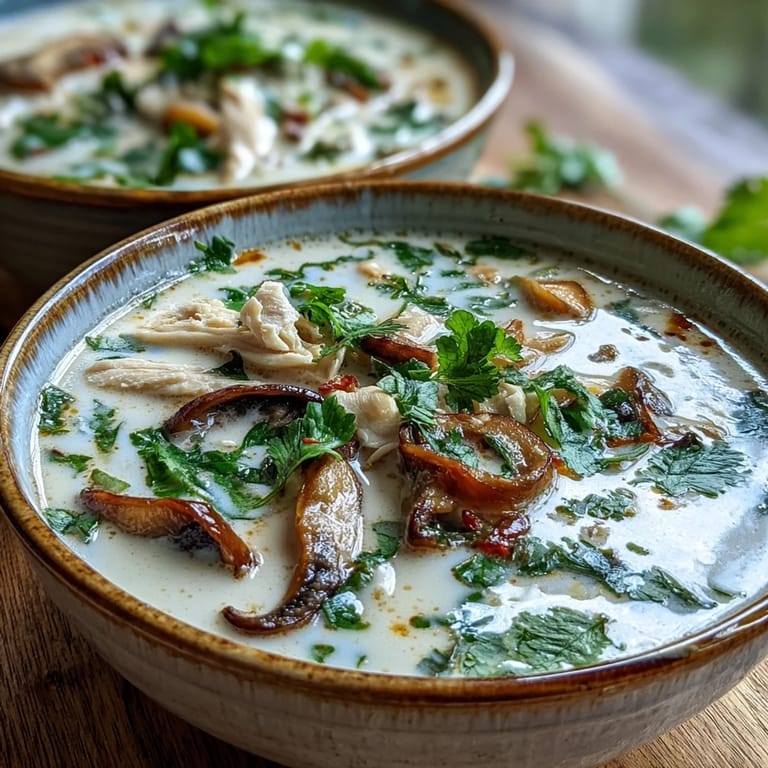
- Remove from heat and fish out the big pieces of lemongrass and galangal if you'd like a cleaner look, though leaving them in is also authentic. Ladle the soup into bowls and scatter cilantro and green onions over top, passing lime wedges around the table so everyone can squeeze in as much brightness as they want.
 Save Pin
 This soup became my comfort meal during a complicated winter, when I'd make a big batch and reheat it throughout the week. There was something grounding about how the flavors seemed to deepen with time, and somehow a simple bowl of tom kha gai felt like someone was taking care of me.
The Magic of Makrut Lime
Makrut lime leaves are dried or frozen tears of joy, honestly—they have this bright, floral citrus quality that's completely different from regular lime juice. When you tear them and drop them into hot liquid, they release their oils and the soup immediately smells like a Thai market, vibrant and alive. Once you taste the difference they make, you'll never make this soup without them again.
Customizing for Your Palate
One of the reasons I love this recipe is how forgiving it is once you understand the framework—you can dial up the heat, add more lime for brightness, or reduce the sweetness if that's your preference. I've made versions with extra mushrooms and shallots when I wanted it hearty, and leaner versions with just chicken and broth when I wanted something lighter. The recipe respects what you bring to it and rewards experimentation.
Making It Your Own
After you've made this a few times, you'll develop your own instincts about what makes it perfect for your taste. Some people add bamboo shoots or baby corn for texture, others swirl in a spoonful of coconut cream right at the end for extra indulgence. The beautiful part is knowing you can trust your own tweaks because you understand how the soup works.
- For vegetarian versions, swap in firm tofu and use soy sauce instead of fish sauce while keeping the same aromatic base.
- Make a double batch and freeze the broth base without the mushrooms for quick weeknight meals that taste restaurant-quality.
- If you can't find makrut lime leaves anywhere, order them online—they keep for months and are worth having on hand.
 Save Pin
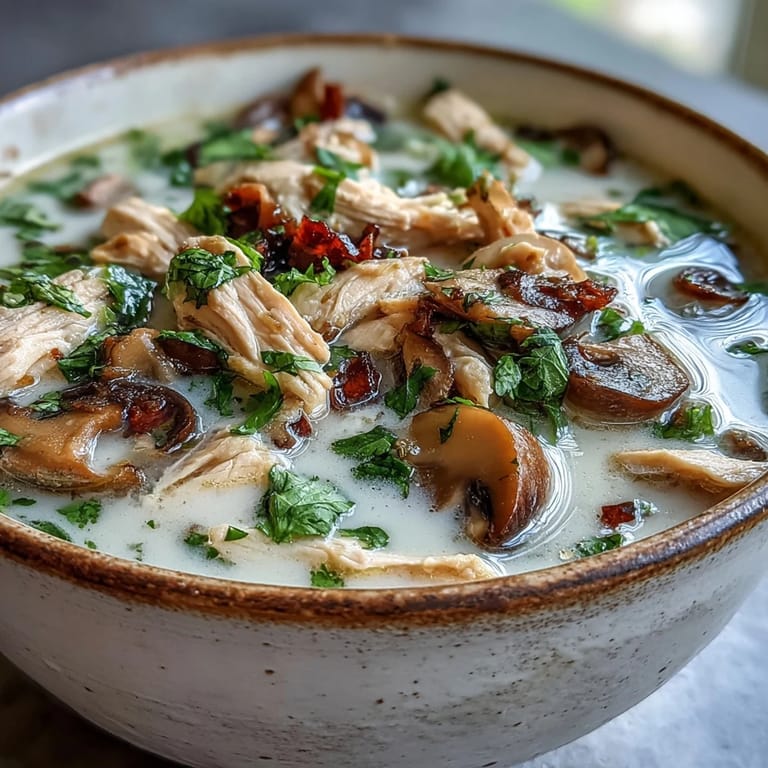
 Tom kha gai is the kind of dish that reminds you why cooking for people matters—it's humble and generous at the same time. Make it once and you'll understand why it's stayed on menus across Thailand for generations.
Recipe Questions
- → Can I substitute galangal with ginger?
While ginger can be used in a pinch, galangal has a distinct citrusy, pine-like flavor that's essential for authentic Tom Kha Gai. It's worth seeking out at Asian markets for the true taste.
- → What type of coconut milk should I use?
Use full-fat, unsweetened coconut milk for the best creamy texture and authentic flavor. Light coconut milk will result in a thinner, less rich soup.
- → How do I prevent the coconut milk from curdling?
Keep the heat at a gentle simmer and avoid bringing the soup to a vigorous boil once the coconut milk is added. Stir gently and maintain moderate temperature throughout cooking.
- → Can I make this vegetarian or vegan?
Yes, substitute chicken with firm tofu, use vegetable broth instead of chicken broth, and replace fish sauce with soy sauce or tamari for a plant-based version.
- → Where can I find makrut lime leaves?
Makrut lime leaves are available at most Asian grocery stores, either fresh or frozen. Some specialty markets also carry dried leaves, though fresh or frozen are preferred for best flavor.
- → How spicy is Tom Kha Gai?
The heat level is adjustable based on the amount of Thai chilies used. Start with fewer chilies for mild heat, or increase for a spicier soup. The coconut milk helps balance the spice.