 Save Pin
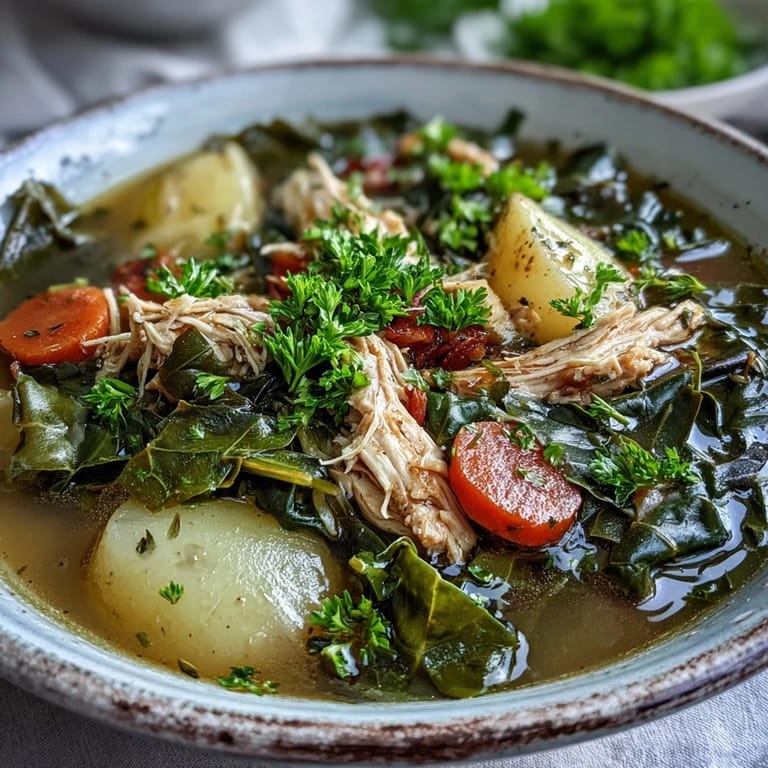
 There's something deeply comforting about ladling a bowl of soup that tastes like it's been simmering on someone's stove for hours, even though you've only been cooking for forty minutes. I discovered this particular version on a chilly afternoon when I had chicken breasts that needed using and a bunch of collard greens that looked too vibrant to ignore. The magic happened when those two things met in the same pot with potatoes and broth, transforming into something warm enough to chase away any gray day. My kitchen filled with the kind of smell that makes people wander in asking what's for dinner, and honestly, that's when I knew this soup had staying power.
I made this for my neighbor who'd just had surgery, and she said it was the first meal in days that didn't feel like eating out of obligation. There's something about serving someone a soup where you can taste the actual chicken and see the vegetables, not some murky broth situation. She asked for the recipe before she'd even finished the bowl, which felt like the highest compliment.
Ingredients
- Boneless, skinless chicken breasts (2, about 400 g): They cook gently in the broth and shred into tender pieces; buying them slightly thawed helps them cook evenly.
- Collard greens (1 large bunch, about 300 g): These hearty leaves add earthiness and nutrition; removing the thick center stems is non-negotiable or they'll stay tough and chewy.
- Yukon Gold potatoes (2 medium): They hold their shape better than russets and add a buttery undertone that makes the whole soup taste richer.
- Carrots (2, peeled and sliced): Slicing them thinner than you think ensures they soften at the same pace as the potatoes.
- Celery stalks (2, diced): These build the foundational flavor alongside the onion and carrot; it's that holy trio that makes soup taste like home.
- Onion (1 medium, diced): Sautéing it until soft releases its sweetness and creates the aromatic base everything else rests on.
- Garlic cloves (3, minced): One minute in hot oil is all you need or the garlic turns bitter and overpowering.
- Low-sodium chicken broth (1.5 liters or 6 cups): Use a good quality broth you'd actually drink on its own; it's the backbone of this entire soup.
- Bay leaf (1): It adds subtle depth that you don't notice is missing until you've had soup made without it.
- Dried thyme (1 teaspoon): This herb has a delicate, slightly floral note that complements collard greens without competing with them.
- Smoked paprika (1 teaspoon): It contributes a whisper of smokiness that suggests depth without announcing itself.
- Black pepper (1/2 teaspoon): Freshly ground is worth the extra thirty seconds it takes.
- Salt (1 teaspoon): Start here and taste as you go; the broth is already salted, so you might need less than you think.
- Olive oil (2 tablespoons): This is enough to coat the pot and soften your vegetables without making anything greasy.
- Lemon juice (from 1/2 lemon): Added at the end, it brightens everything and makes you taste flavors you didn't know were there.
- Fresh parsley (for garnish): It's optional but transforms the bowl from simple to intentional.
Tired of Takeout? 🥡
Get 10 meals you can make faster than delivery arrives. Seriously.
One email. No spam. Unsubscribe anytime.
Instructions
- Build your base:
- Heat the olive oil in a large soup pot over medium heat and add your diced onion, carrots, and celery. Let them sauté for about five to six minutes, stirring occasionally, until the onion becomes translucent and the carrots begin to soften. You'll know it's right when the whole kitchen smells sweet and savory at the same time.
- Wake up the garlic:
- Add your minced garlic and stir constantly for just one minute, keeping the heat steady so it toasts without burning. This brief moment of attention prevents bitter garlic from ruining what you've built.
- Gather everything in the pot:
- Add the chicken breasts, diced potatoes, bay leaf, thyme, smoked paprika, salt, and pepper, then pour in all the chicken broth. The pot will seem quite full, but that's exactly right.
- Bring to a gentle boil and simmer:
- Let the liquid come to a rolling boil, then reduce the heat and cover the pot partially. Simmer for about twenty minutes until the chicken is cooked through (you can peek and cut into it if you're nervous) and the potatoes are fork-tender. The chicken will be white throughout and no longer pink, even in the thickest part.
- Shred the chicken:
- Remove the chicken breasts from the pot and place them on a cutting board, then use two forks to pull the meat apart into bite-sized shreds. Return the shredded chicken to the pot and stir it back into the broth.
- Add the collard greens:
- Stir in your chopped collard greens and simmer, uncovered, for ten to twelve minutes until they're completely tender but still a vibrant green color. If you let them go longer, they turn olive-brown and lose their character.
- Finish with brightness:
- Squeeze the lemon juice into the pot and stir well, then taste the soup and adjust the salt and pepper to your preference. A single squeeze of lemon juice is the difference between a soup that tastes flat and one that tastes alive.
- Serve with care:
- Ladle the soup into bowls, top with fresh parsley if you have it, and serve while it's steaming hot. The heat brings out all the aromas and makes the whole experience feel generous.
 Save Pin
 My daughter brought this soup to school for lunch three days in a row, which meant she was keeping the thermos to herself and not sharing with anyone else. That's when I realized it had crossed from being just dinner into being something she actually wanted, and that small shift in her behavior told me everything.
How to Tell When Everything Is Done
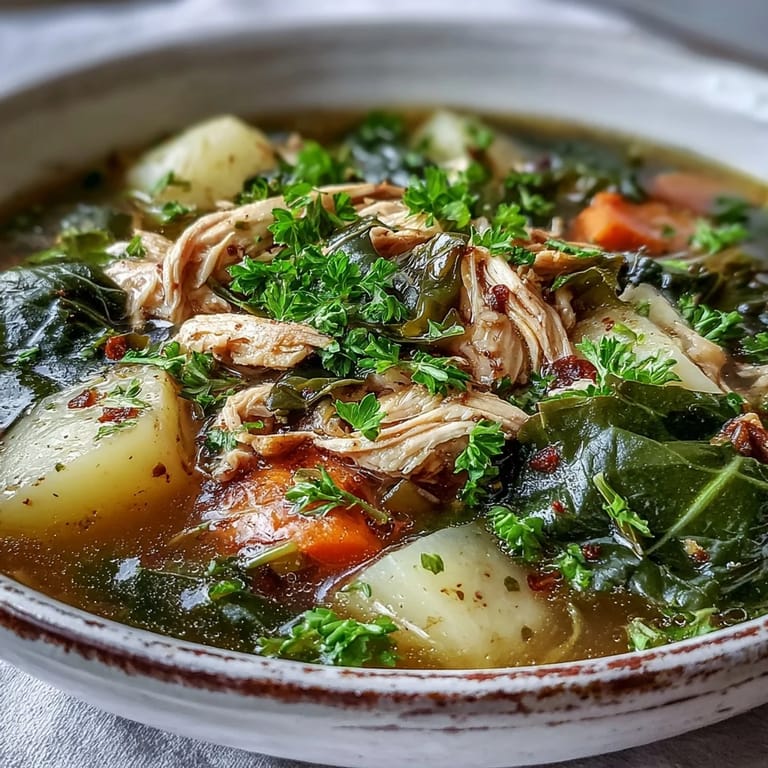
The chicken is ready when it's pure white throughout with no pink hiding in the center, and when you fork it, the fibers separate without resistance. The potatoes should break easily when poked with a fork but not be falling apart into the broth. The collard greens should be soft enough to cut with the edge of your spoon but still maintain their color, which means you're done simmering just in time.
Why This Soup Stays Good in the Freezer
Unlike creamy soups that separate when frozen, this broth-based version actually freezes beautifully and tastes just as good weeks later. I've learned to freeze it in individual containers so I can reheat a single serving on a Tuesday night without thinking. The flavors actually deepen after sitting in the freezer, which feels like a gift.
Simple Variations That Work
You can swap the collard greens for kale or Swiss chard, though kale will cook faster and chard will add a slightly earthier note. Some people add a Parmesan rind while simmering and remove it before serving, which adds a subtle umami depth that makes people ask what your secret ingredient is. For vegetarians, skip the chicken entirely, use vegetable broth instead, and stir in a can of drained white beans for protein.
- A handful of fresh spinach stirred in at the very end creates a pretty color contrast and milder flavor if you're cooking for kids.
- Serving this over brown rice or barley instead of in bowls transforms it from soup to a more substantial meal that sticks with you longer.
- Crusty bread is not optional; it's the vehicle for soaking up the last delicious spoonfuls from the bottom of your bowl.
 Save Pin
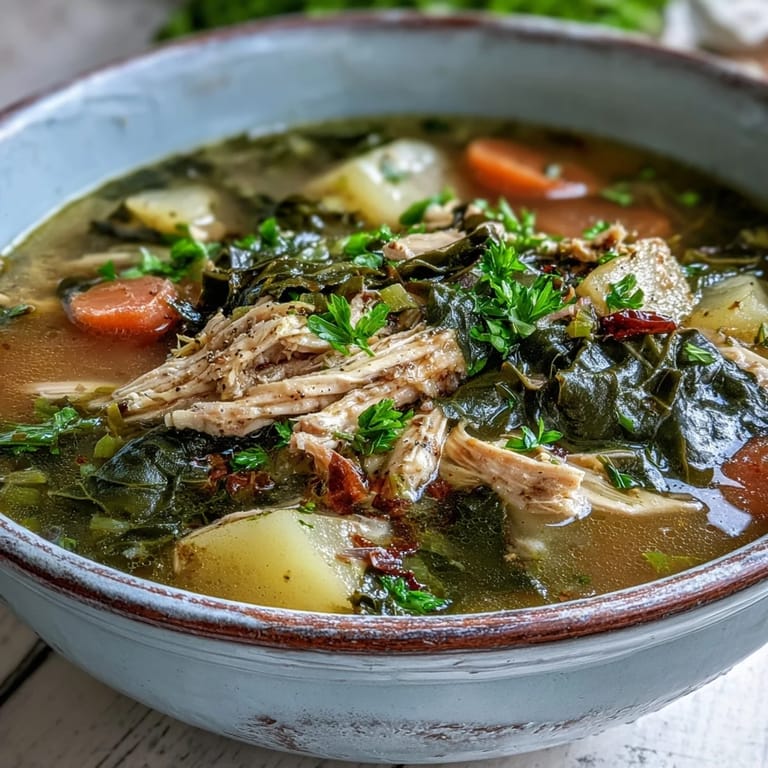
 This is the kind of soup that makes you feel like you're taking care of yourself, which is maybe the most important ingredient of all. Make it, feed someone, and watch their whole day get a little brighter.
Recipe Questions
- → Can I make this soup ahead of time?
Absolutely. This soup actually tastes better the next day as flavors have time to meld together. Store in an airtight container in the refrigerator for up to 4 days. Reheat gently over medium heat, adding a splash of broth if needed.
- → What can I substitute for collard greens?
Kale, Swiss chard, or mustard greens work beautifully as substitutes. Keep in mind that cooking times may vary slightly—kale cooks faster than collards, while chard may need less time to become tender.
- → Is this soup freezer-friendly?
Yes, it freezes well for up to 3 months. Cool completely before transferring to freezer-safe containers. Leave some space as liquids expand when frozen. Thaw overnight in the refrigerator before reheating.
- → How do I prevent the potatoes from getting mushy?
Yukon Gold potatoes hold their shape better than russets. Cut them into uniform 1-inch cubes and avoid overcooking—test with a fork at the 20-minute mark. They should be tender but still intact.
- → Can I use rotisserie chicken instead?
Definitely. Use about 3 cups of shredded rotisserie chicken and add it during the last 10 minutes of cooking along with the collard greens, just long enough to heat through. This shortcut reduces total time to about 35 minutes.
- → What should I serve with this soup?
Crusty bread, cornbread, or garlic knots are perfect for soaking up the flavorful broth. For a lighter option, serve with a simple green salad dressed with vinaigrette. Overcooked brown rice also makes it more filling.