 Save Pin
 There's a particular moment in late winter when blood oranges hit the market and suddenly everything feels possible in the kitchen again. I was standing at the farmer's stall, holding one up to the light, when the vendor mentioned she'd been pairing them with halloumi for her own dinners. That conversation led me here, to this salad—a collision of Mediterranean brightness and Middle Eastern warmth that somehow feels both unexpected and inevitable.
I made this for friends on a Tuesday evening when we were all tired of cooking the same rotation, and someone actually set down their fork mid-bite and asked what I'd done differently. That question—that pause—is when I knew this salad had something worth repeating.
Ingredients
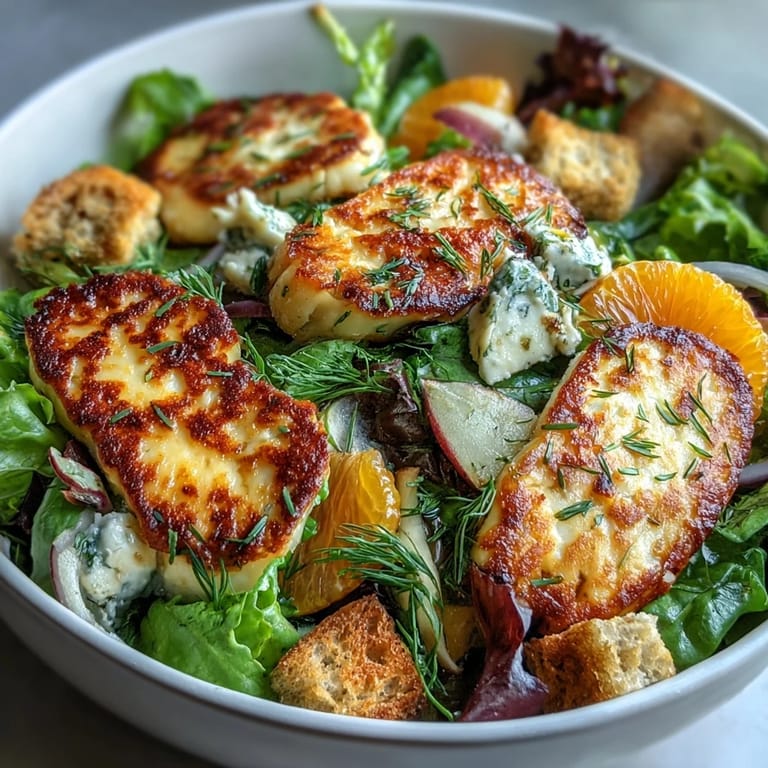
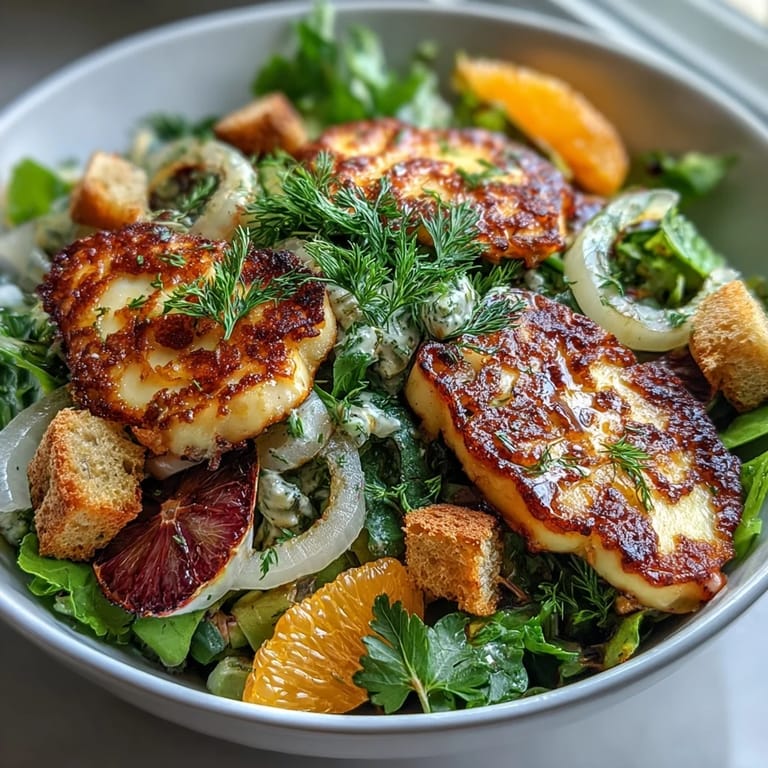
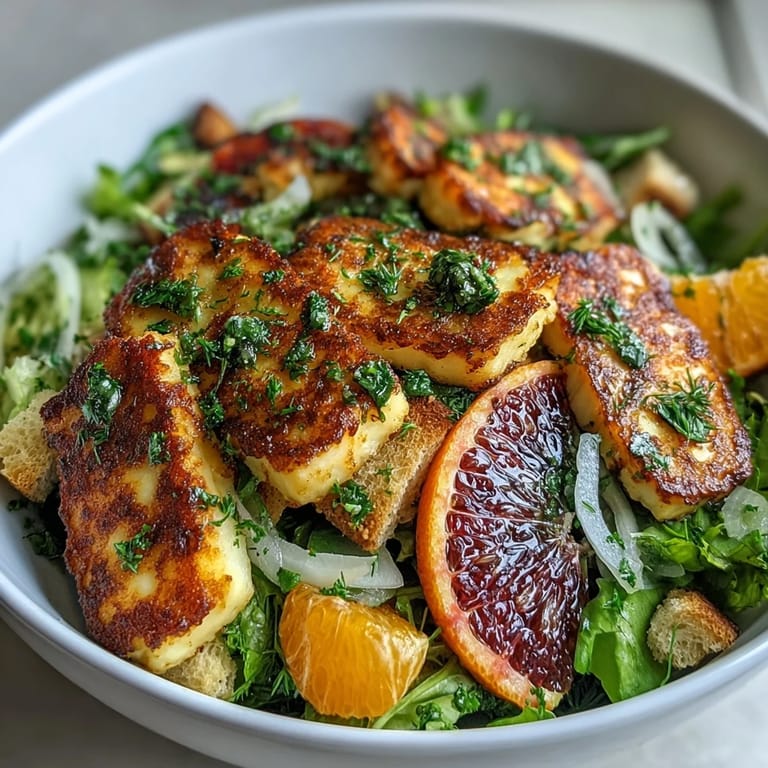
- Halloumi cheese, sliced (200 g): This squeaks between your teeth when you bite into it, and that's exactly what you want; it has a high melting point so it won't collapse in the pan, just golden up beautifully on both sides.
- Blood oranges, peeled and sliced (2): The deep crimson flesh matters here—not just visually but flavor-wise, they're more complex than regular oranges with hints of berry running underneath.
- Mixed salad greens (200 g): Use a combination of tender and sturdy; the parsley and mint aren't just fillers, they're the backbone that holds the whole thing together.
- Cucumber, sliced (1/2): A cool counterpoint to everything warm and bright, adding that essential crunch.
- Cherry tomatoes, halved (200 g): Their sweetness plays beautifully against the sumac's tartness.
- Radishes, thinly sliced (4): These give you a peppery snap and keep everything feeling fresh rather than heavy.
- Red onion, thinly sliced (1 small): Slice it paper-thin so it dissolves almost into the dressing rather than dominating.
- Sourdough bread, cut into cubes (2 thick slices): The sourness echoes the vinegar in the dressing in a way that feels intentional.
- Olive oil for croutons and frying (3 tbsp total): Good quality matters since you're not cooking it long enough to mellow its flavors.
- Extra virgin olive oil for dressing (3 tbsp): This is where you splurge; a peppery one adds another layer.
- Fresh lemon juice (1 tbsp): Fresh is non-negotiable—bottled changes the whole balance.
- Red wine vinegar (1 tbsp): It's gentler than some vinegars and plays well with the citrus already in the salad.
- Ground sumac (1 tsp): This ingredient is the conversation starter; if you don't have it, the salad becomes ordinary.
- Pomegranate molasses (1 tsp): A small amount goes a long way, adding depth without making anything taste like dessert.
- Sea salt and black pepper: Taste as you go; the blood orange releases juice as it sits, which can change how seasoned everything feels.
Tired of Takeout? 🥡
Get 10 meals you can make faster than delivery arrives. Seriously.
One email. No spam. Unsubscribe anytime.
Instructions
- Make your croutons golden and alive:
- Preheat to 180°C and toss your sourdough cubes with olive oil and salt, spreading them on the baking sheet in a single layer. They'll smell incredible around the eight-minute mark, and that's when you should turn them—don't let them go dark, just the color of honey.
- Build your dressing with intention:
- Whisk the olive oil, lemon juice, red wine vinegar, sumac, pomegranate molasses, salt, and pepper together in a small bowl. The sumac will bloom a bit as it sits, so make this while the croutons are cooking and let it rest.
- Fry the halloumi until it's properly golden:
- Heat oil in a nonstick skillet over medium heat and lay your slices in carefully—they should sizzle immediately. Two minutes per side is usually right, just until the exterior has that caramelized crust.
- Assemble the foundation:
- In your largest bowl, combine the greens, cucumber, cherry tomatoes, radishes, and red onion. This is your base, and it should take up maybe half the bowl.
- Bring it all together with warmth:
- Add the blood orange slices, still-warm halloumi, and crispy croutons, then drizzle everything with your dressing. Toss gently—you want to coat everything without bruising the greens.
 Save Pin
 Someone asked me once why I bothered making a salad when I could just buy one from the shop, and it was hard to explain that it's not really about the salad. It's about the ritual of slicing each vegetable with full attention, the way the kitchen smells when halloumi hits hot oil, the moment when everyone around your table realizes they're tasting something they've never quite had before.
Why Sumac Changes Everything
Sumac is one of those ingredients that sounds exotic until you taste it, then it seems obvious. It's tart without being acidic in the way vinegar is, with this almost floral, berry-like undertone that makes people ask what's different about your dressing. If you've never cooked with it before, this salad is the perfect introduction because the sumac isn't hidden—it's the star.
The Blood Orange Question
Blood oranges have a short season, usually January through March in most places, and they're worth seeking out for this specific salad. Regular oranges are fine if that's what you have, but they're milder, almost sweet, where blood oranges bring this subtle berry note that echoes beautifully with the sumac and pomegranate molasses. If you can't find them, or if it's not the season, let yourself use what makes sense—there's no shame in adaptation.
Building Texture and Contrast
This salad works because nothing is the same texture twice—you get the squeak of halloumi, the snap of radishes, the give of blood orange segments, the crunch of croutons, the tender chew of the greens. Every bite should feel like a small surprise, a reminder that salad doesn't have to be one-dimensional. The warmth of the halloumi against the cool greens creates its own kind of contrast too.
- Don't skip the pomegranate molasses; a quarter teaspoon more and it tips from balanced to sweet.
- If your halloumi is cold when it hits the pan, it needs an extra minute per side to develop that golden crust.
- The red onion can be prepped an hour ahead, but dress the salad only minutes before serving.
 Save Pin
 This salad has become the thing I make when I want to feel like I'm cooking with intention, when I want people to taste something that feels both familiar and surprising. It's the kind of meal that reminds you why you bother cooking at all.
Recipe Questions
- → What makes fattoush different from other salads?
Fattoush is a Levantine salad distinguished by its use of fried or toasted bread pieces that soak up the tangy dressing. The addition of sumac gives it a characteristic citrusy, tangy flavor that sets it apart from other Mediterranean salads.
- → Can I prepare the components ahead of time?
You can prepare the dressing and vegetables up to a day in advance. Store them separately in the refrigerator. Fry the halloumi and toast the bread just before serving to maintain their optimal texture—warm and crispy versus cold and soggy.
- → What can I substitute for halloumi?
Grilled paneer, firm feta, or even thick-cut tofu work well. For a vegan option, try marinated and grilled tofu or vegan feta. The key is choosing something that holds its shape during cooking and provides a salty contrast to the sweet oranges.
- → Why use blood oranges instead of regular ones?
Blood oranges offer a beautiful deep red color and a slightly sweeter, berry-like flavor compared to regular oranges. Their vibrant hue creates stunning visual contrast against the green herbs and golden halloumi. However, navel or Valencia oranges work perfectly fine when blood oranges aren't in season.
- → Is this fattoush served warm or cold?
This version is designed to be served warm, featuring freshly fried halloumi and toasted croutons. The contrast between the warm cheese and bread against the cool, crisp vegetables creates the most appealing eating experience. Serve immediately after assembling to preserve those temperature differences.
- → What does sumac taste like?
Sumac is a tart, lemony spice made from ground berries. It provides a bright, acidic flavor similar to lemon but with a slightly fruity, astringent quality. It's a staple in Middle Eastern cooking and gives this dressing its characteristic pinkish hue and tangy finish.