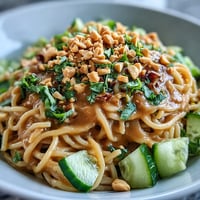
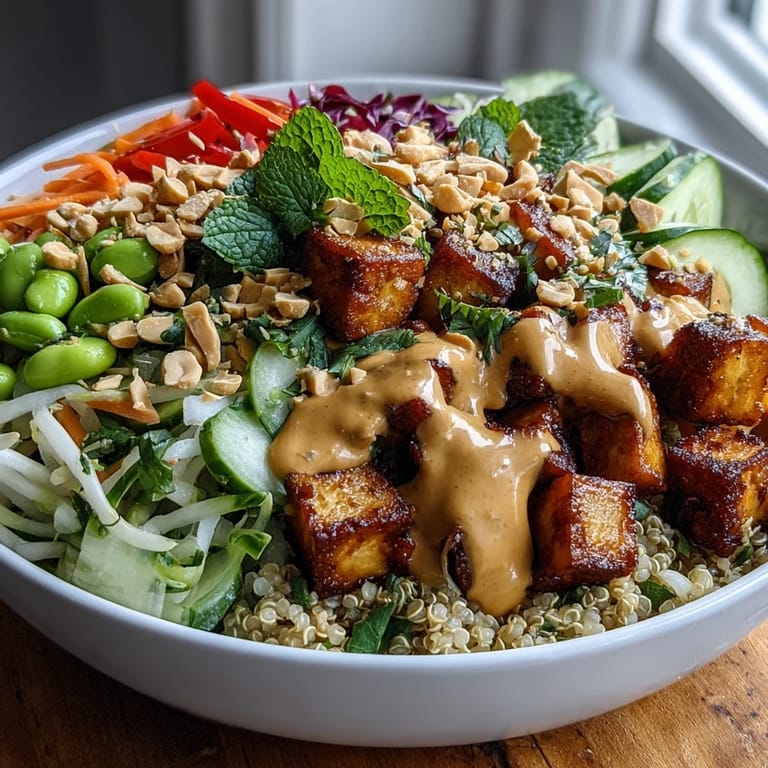
 Save Pin
 My kitchen smelled like toasted sesame oil the afternoon my neighbor dropped by unannounced, and instead of scrambling, I threw together this bowl while we talked about her garden. What started as improvisation—whatever vegetables I had, some crispy tofu, a quick peanut sauce—became something so satisfying that she asked for the recipe before leaving. That's when I realized this wasn't just lunch; it was a quiet moment of nourishment that felt intentional without being fussy.
I made this for a friend who'd just started eating plant-based, and watching her face light up when she took that first bite reminded me that good food doesn't need to announce itself or apologize for what it isn't. She came back three days later asking if I could teach her how to make it, and we spent a rainy afternoon prepping vegetables and talking about why eating this way felt right for her.
Ingredients
- Extra-firm tofu: Press it well before coating—moisture is the enemy of crispiness, and a damp paper towel or cloth works better than you'd think.
- Cornstarch: This is your secret to that golden, crispy exterior that actually stays crispy even when dressed with sauce.
- Brown rice or quinoa: Brown rice gives earthiness, quinoa adds a nutty bite and complete protein—choose based on your mood and what's in your pantry.
- Carrot, bell pepper, cabbage: The colors aren't just pretty; they're telling you about different nutrients, and the variety keeps each spoonful interesting.
- Edamame: Steaming them yourself if frozen takes two minutes and tastes fresher than pre-cooked versions.
- Creamy peanut butter: Use the kind without added sugar or oils—it'll make a silkier, more genuine sauce.
- Soy sauce or tamari: Tamari is your gluten-free friend, and honestly, it's become my default because the flavor is cleaner.
- Rice vinegar or lime juice: This brightens everything; don't skip it or your sauce will taste flat and one-dimensional.
- Sesame oil: A little goes a long way—it's the umami whisper that ties the whole bowl together.
Tired of Takeout? 🥡
Get 10 meals you can make faster than delivery arrives. Seriously.
One email. No spam. Unsubscribe anytime.
Instructions
- Start your grains:
- Get your rice or quinoa cooking first so it has time to become tender and fluffy. This is your foundation, so follow the package instructions and don't rush it.
- Press and cube the tofu:
- Wrap your block in a clean kitchen towel or paper towels, set it on a plate, and weight it down with something heavy for 10 minutes. You're not trying to destroy it—just gently encourage the moisture out so the outside can crisp up properly.
- Coat with confidence:
- Toss those cubes with cornstarch and salt in a bowl until every surface is covered in a fine, dry layer. This is what creates that satisfying crunch.
- Crisp the tofu:
- Either bake at 400°F for 20–25 minutes, flipping halfway through, or pan-fry in olive oil over medium-high heat until golden on all sides. You're looking for color and a slight firmness when you press it.
- Whisk the peanut sauce:
- Combine peanut butter, soy sauce, maple syrup, rice vinegar, sesame oil, warm water, minced garlic, and ginger in a bowl, whisking until smooth and glossy. Start with the amount of water listed, then adjust until it's the consistency you want—thinner for drizzling, thicker for dipping.
- Prep your vegetables:
- Julienne the carrot into thin matchsticks, slice the pepper into ribbons, shred the cabbage, slice the cucumber, and chop the spring onions. Steam frozen edamame for 2 minutes if needed.
- Build your bowls:
- Divide the warm grains among four bowls, then arrange the crispy tofu and all your colorful vegetables on top in whatever pattern makes you happy. The arrangement doesn't matter—what matters is that you're building something that feels intentional.
- Drizzle and finish:
- Pour that peanut sauce generously over everything, then scatter roasted peanuts, sesame seeds, and fresh cilantro or mint on top. Serve right away while the tofu is still warm and the vegetables still have their snap.
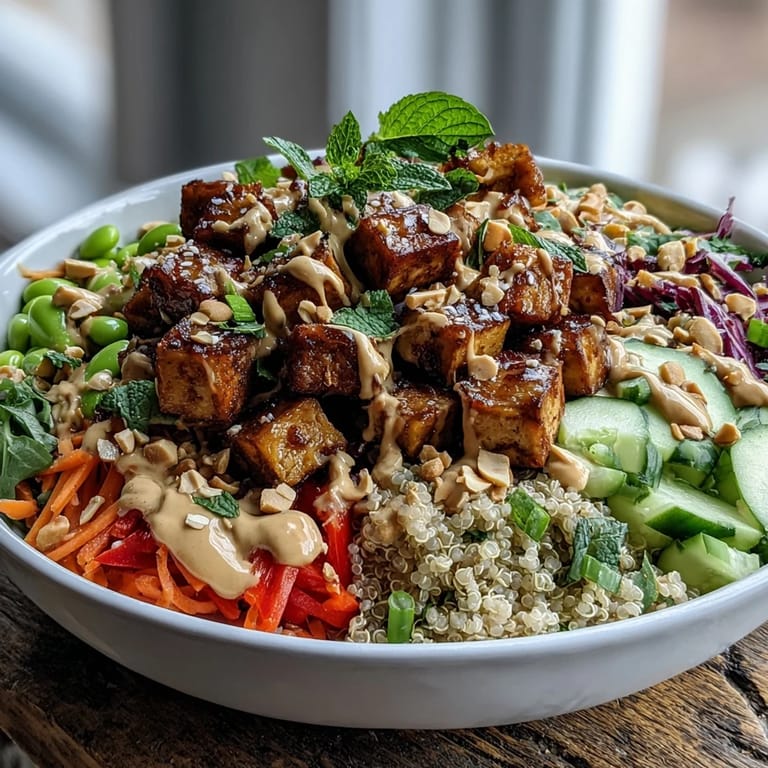 Save Pin
 One evening, I made this bowl during a moment when I was questioning whether I was doing anything right, and the simple act of chopping vegetables, watching the tofu turn golden, and tasting something I'd created with my own hands felt like a quiet conversation with myself. It reminded me that nourishment isn't always complicated—sometimes it's just about showing up and doing something intentional, one bowl at a time.
Why Your Tofu Actually Tastes Good
The secret isn't some fancy technique—it's respecting the tofu enough to dry it out, coat it properly, and give it heat. Most people skip the pressing step or use soft tofu and then wonder why it tastes like sadness. Extra-firm tofu, when treated right, becomes this vehicle for flavor that absorbs everything around it while maintaining its own dignity. The cornstarch is doing the heavy lifting in the crisping department; it's not a substitute for proper pressing, but it's the difference between golden-brown and pale and limp.
Building Flavor Through Layers
The peanut sauce is where all the magic happens, and it works because it's playing four roles at once: it's rich from the peanut butter, bright from the vinegar or lime, slightly sweet from the maple syrup, and complex from the garlic, ginger, and sesame oil. None of these flavors is shouting—they're all whispering together, which is why the sauce tastes complete even though no single ingredient dominates. When you drizzle it over everything, it becomes the storyteller that ties all those disparate elements into something coherent and deeply satisfying.
Making It Your Own
This bowl isn't precious, and it doesn't want to be—it's actually at its best when you treat it like a canvas and paint with whatever you have on hand or whatever you're craving. Some days I add roasted sweet potato because I want something starchy and comforting; other times it's avocado because I need that richness. The grains can swap out for cauliflower rice if you're watching carbs, and the vegetables are more of a suggestion than a rule. What matters is that the tofu stays crispy, the sauce stays bright, and you end up with something that feels both nourishing and exciting.
- Roasted sweet potato, steamed broccoli, or shredded beets all elevate the bowl in different ways—experiment fearlessly.
- Make a double batch of peanut sauce and keep it in the fridge for drizzling over everything all week long.
- If you have leftover cooked grains, this is the perfect excuse to use them up before they lose their appeal.
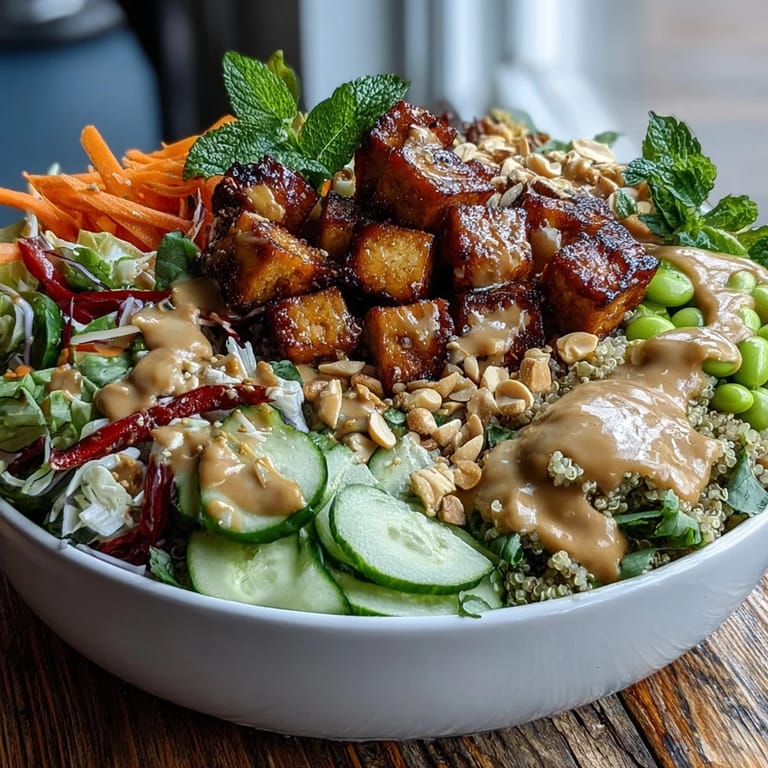 Save Pin
 This bowl has become my answer to the question I used to ask myself constantly: what can I make that feels good to eat and good to be? It's practical enough for a weeknight, nourishing enough to feel like self-care, and honest enough to remind me that sometimes the best meals are the ones we build with intention and eat without apology.
Recipe Questions
- → How do I get crispy tofu?
Press extra-firm tofu to remove excess moisture, cube evenly, toss with cornstarch, and either bake at 200°C for 20-25 minutes or pan-fry until golden brown on all sides.
- → Can I make this gluten-free?
Yes, simply substitute soy sauce with tamari and verify all packaged ingredients are certified gluten-free. The rest of the ingredients naturally contain no gluten.
- → What grains work best?
Brown rice and quinoa are excellent choices, but you can also use cauliflower rice for fewer carbohydrates, jasmine rice for quicker cooking, or farro for added protein.
- → How long does the peanut sauce keep?
The sauce stores in an airtight container in the refrigerator for up to one week. Whisk in a splash of warm water before using if it thickens.
- → Can I prep this in advance?
Cook grains, chop vegetables, and prepare sauce up to 3 days ahead. Store tofu separately and reheat in the oven or skillet to restore crispness before assembling.