 Save Pin
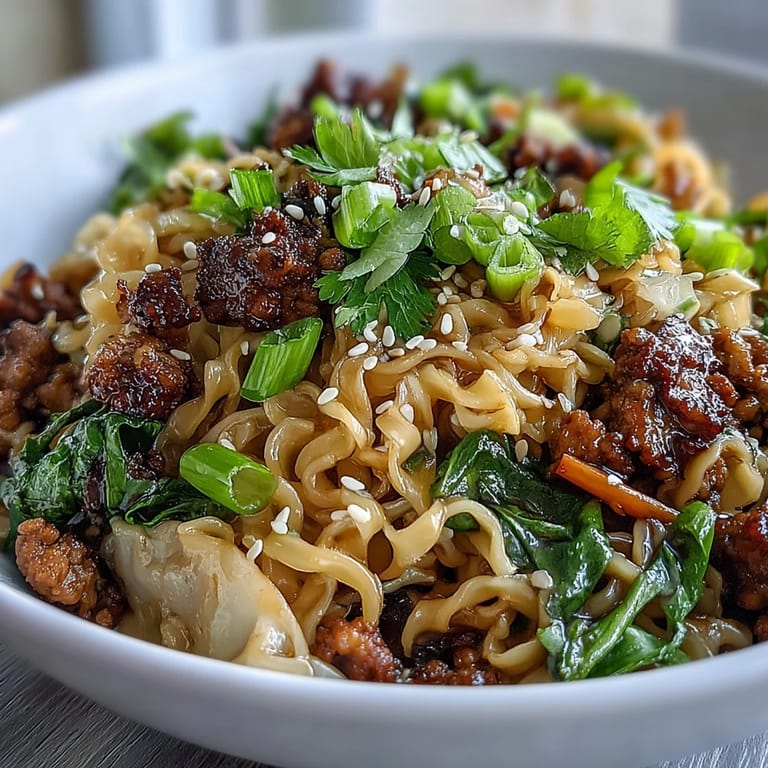
 The first time I made these bowls, my kitchen smelled exactly like my favorite dumpling house at 11 PM on a Tuesday. I had just unpacked groceries and realized I forgot to buy wrappers, so I threw everything into a skillet instead. My roommate walked in asking what restaurant I ordered from, and we ended up standing at the counter eating straight from the wok.
Last winter my sister came over nursing a broken heart and a serious craving for takeout. I made this recipe with extra chili-garlic sauce because she always orders hers spicy hot. We sat on the couch watching comfort movies and she told me this was exactly what she needed—something warm and familiar that somehow felt new again.
Ingredients
- 8 oz dried rice noodles or lo mein noodles: Rice noodles give you that delicate spring while wheat noodles stand up to the hearty sauce—both work beautifully here
- 1 lb ground pork or chicken: Pork gives you traditional dumpling richness but chicken keeps it lighter while still absorbing all those seasonings
- 1 tbsp soy sauce: This is the base of your meat seasoning and adds that first layer of savory depth
- 1 tsp toasted sesame oil: A tiny amount goes incredibly far—this is what makes your kitchen smell like an authentic restaurant
- 1 tsp cornstarch: The secret to velvety, tender meat that stays juicy even after high heat cooking
- 1/2 tsp sugar: Just enough to balance the salty soy sauce and help the meat develop those gorgeous browned edges
- 2 tbsp neutral oil divided: You need separate pools for searing meat and blooming aromatics—each job needs its own fresh oil
- 3 cloves garlic minced: Fresh garlic is nonnegotiable here—jarred garlic loses its punch the moment it hits heat
- 1 tbsp fresh ginger grated: Grating releases all those aromatic oils that chopping just cannot capture
- 4 green onions thinly sliced: Keep whites and greens separate—whites need high heat while greens are your fresh finish
- 2 cups finely shredded green cabbage: The cabbage wilts into the sauce creating these sweet tender ribbons throughout the bowl
- 1 cup shredded carrots: Matchstick carrots or hand-shredded both work—they add crunch and color against the soft noodles
- 1 cup sliced shiitake or cremini mushrooms: Mushrooms become little sponges for the potsticker sauce turning into umami bombs
- 1/3 cup low-sodium soy sauce: Low-sodium lets you control the salt level since the sauce reduces slightly
- 2 tbsp rice vinegar: This brightens everything and cuts through the rich meat and sesame oil
- 1 tbsp oyster sauce: Hoisin works too but oyster sauce gives you that authentic restaurant depth
- 1 tbsp chili-garlic sauce: Start here and adjust—some like a gentle warmth while others want forehead sweat
- 1 tbsp brown sugar or honey: This pulls all the sharp flavors together into that glossy dipping sauce consistency
- 1/2 cup chicken broth or water: Broth adds another layer of flavor but water keeps it lighter and lets other ingredients shine
Tired of Takeout? 🥡
Get 10 meals you can make faster than delivery arrives. Seriously.
One email. No spam. Unsubscribe anytime.
Instructions
- Get your noodles ready first:
- Boil them until just tender, rinse with cold water, and toss with a few drops of oil so they do not turn into one giant clump while you cook everything else
- Season the meat like dumpling filling:
- Mix the pork with soy sauce, sesame oil, cornstarch, pepper, sugar, and salt until it feels slightly sticky—this means the cornstarch is working its magic
- Whisk up your potsticker sauce:
- Combine soy sauce, rice vinegar, oyster sauce, chili-garlic, sesame oil, brown sugar and broth until the sugar completely disappears
- Prep your vegetables while the meat marinates:
- Shred your cabbage, slice your mushrooms and carrots, and separate those green onion whites from the greens
- Sear the meat until it is golden and crispy:
- Let it cook undisturbed for those first few minutes so you get those gorgeous browned edges that taste exactly like fried dumplings
- Bloom your aromatics in the pan:
- Push the meat aside and add fresh oil, garlic, ginger and green onion whites—watch them sizzle and perfume everything in the skillet
- Cook your vegetables in stages:
- Mushrooms first, then cabbage and carrots until they are wilted but still have some crunch in every bite
- Pour in that sauce and watch it thicken:
- Let it bubble for just a minute or two until it coats the back of a spoon and clings to everything in the pan
- Toss in the noodles and bean sprouts:
- Use tongs to gently fold everything together and add splashes of water if it looks too dry—those noodles should drink up all that flavor
- Finish with fresh elements:
- Squeeze in some lime, stir in half the green onions, then top bowls with the remaining onions, cilantro and sesame seeds
 Save Pin
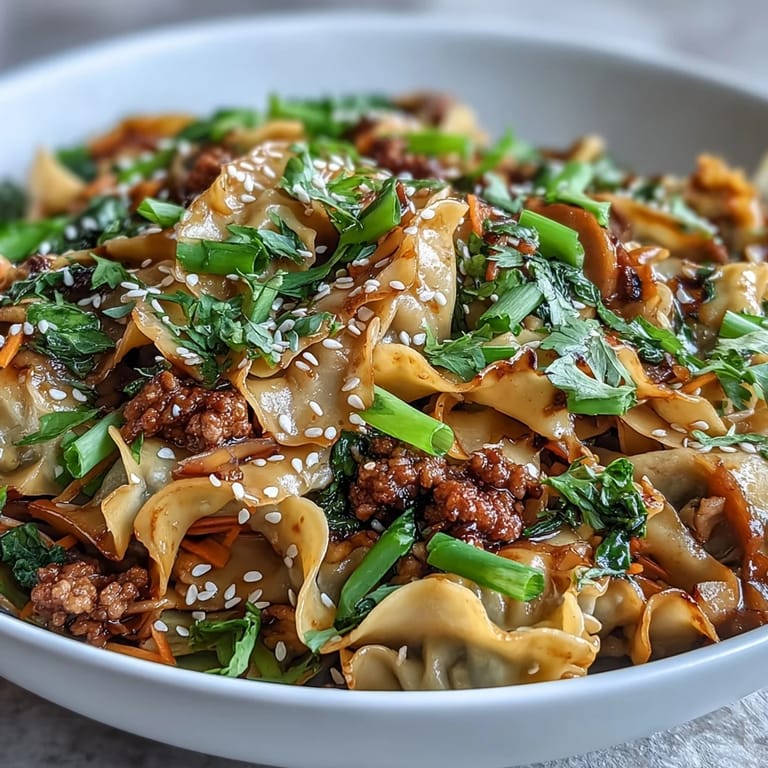
 My partner claimed he did not like cabbage until I made this for dinner on a rainy Sunday. He watched me shred it into the pan, skeptical, then went back for thirds picking out every last cabbage ribbon he had claimed to hate. Sometimes the right preparation changes everything.
Making It Your Own
Swap in ground turkey or beef if that is what you have, or use crumbled tofu for a completely plant-based version. I have made this with whatever vegetables were languishing in my crisper drawer—bok choy, snap peas, even thinly sliced bell peppers all work beautifully.
The Sauce Balance
Taste your sauce before it hits the pan—everyone has different heat tolerance and sweet preferences. I keep extra chili-garlic on the table for the heat seekers while my kids prefer extra lime wedges to brighten their bowls without the burn.
Make-Ahead Magic
The sauce keeps for two weeks in the fridge and actually tastes better after the flavors meld together. I sometimes double the meat portion and freeze half for those nights when takeout sounds tempting but my wallet disagrees.
- Cook noodles al dente if you plan to reheat leftovers—they soften up in the sauce overnight
- Bean sprouts are best added fresh as a topping instead of cooked into the dish
- A runny yolk on top makes this feel like an extra special restaurant meal at home
 Save Pin
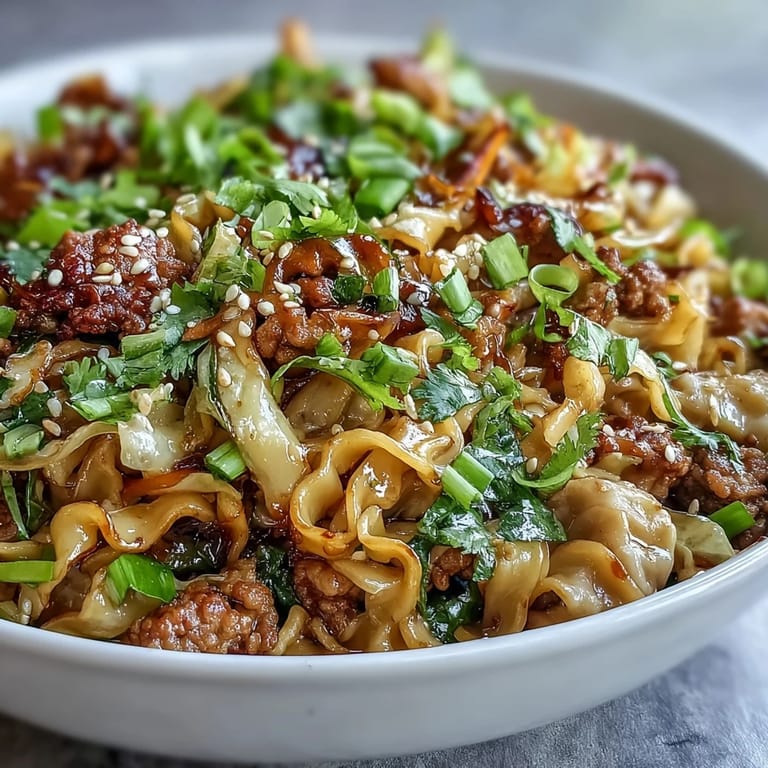
 I hope this recipe finds its way into your regular rotation the way it has in mine. There is something deeply satisfying about restaurant flavors coming together in your own kitchen.
Recipe Questions
- → What makes this taste like potstickers?
The seasoning blend on the ground pork mirrors traditional dumpling filling—soy sauce, toasted sesame oil, white pepper, and sugar. The same savory sauce flavors coat the noodles, creating that unmistakable potsticker taste profile.
- → Can I use different noodles?
Rice noodles work beautifully for gluten-free versions, while lo mein or wheat noodles offer chewier texture. Udon or soba noodles also pair well with these Asian flavors.
- → What protein substitutes work best?
Ground chicken, turkey, or beef all absorb the dumpling seasoning well. Crumbled firm tofu or plant-based ground meat makes excellent vegetarian alternatives.
- → How do I prevent noodles from sticking?
Rinse cooked noodles with cold water and toss with a few drops of sesame or neutral oil before setting aside. This keeps them separate until ready to combine with the sauce.
- → Can this be made ahead?
Components can be prepped in advance—cook noodles, brown meat, and chop vegetables up to a day ahead. Reheat together with a splash of water or broth before serving.
- → Is the sauce spicy?
The chili-garlic sauce adds moderate heat. Reduce amount for milder flavor or increase for extra kick. The sauce balances spicy, salty, sweet, and tangy notes.