 Save Pin
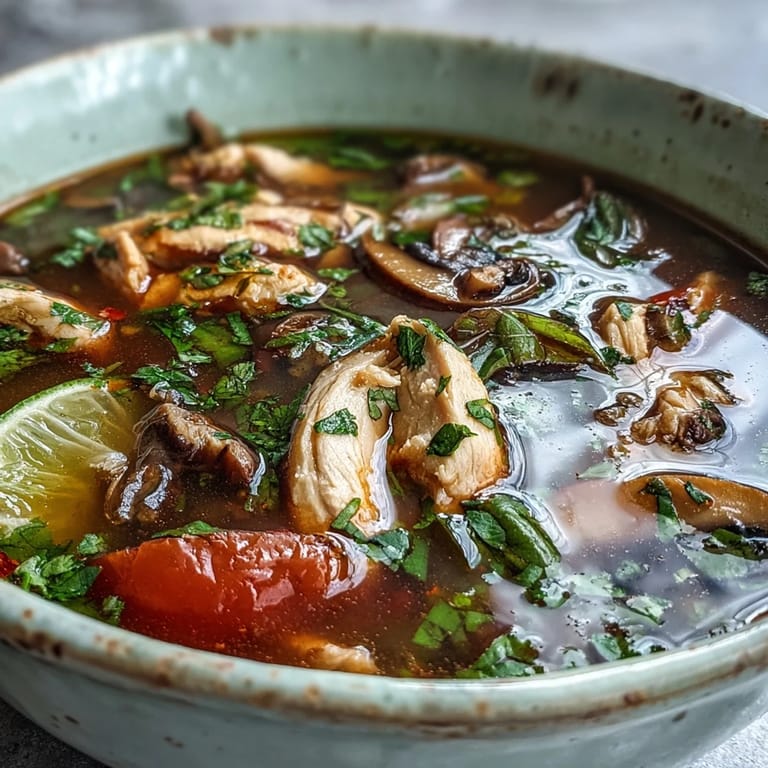
 The first time I truly understood Tom Yum wasn't from a recipe book but from watching my Thai neighbor chop lemongrass with the precision of someone who'd done it a thousand times. She handed me a bowl still steaming, and the aroma alone—citrusy, spicy, herbaceous—transported me somewhere between comfort and adventure. Now whenever I make this soup, I chase that same magic: the moment when simple broth transforms into something that tastes like a conversation between fire and brightness. It's become my go-to when I want something that feels both elegant and deeply satisfying in under an hour.
I made this soup for a friend who'd just moved back to the city, and we sat in my small kitchen while the pot bubbled away. She kept asking what each smell was—the galangal, the lime leaves, the crushed chilies creating tiny wisps of steam. By the time we ate, she was already planning to make it herself, and I realized that's when Tom Yum became more than soup to me: it became a small way of saying welcome, of showing someone the world through flavor.
Ingredients
- Boneless, skinless chicken thighs or breasts (400 g, thinly sliced): Thighs stay more tender and forgiving than breasts, but either works—the key is slicing thin so they cook through quickly and absorb the broth's flavors.
- Chicken stock (1.2 liters): Use good quality here because it's your foundation; homemade is best, but a clean store-bought version works when life gets busy.
- Lemongrass (2 stalks, trimmed and smashed): This is non-negotiable for authentic Tom Yum—smashing it breaks open the fibers and releases those bright, grassy oils that define the whole dish.
- Fresh galangal (4 slices, about 12 g) or dried (2 tsp): Fresh is always superior, but dried galangal works in a pinch; it adds a peppery, almost medicinal warmth that softens the heat.
- Makrut lime leaves (5 leaves, torn): These papery leaves deliver citrus without being tart—they're actually sweeter than regular limes and essential for authentic flavor.
- Birds eye chilies (4, lightly crushed): Don't remove the seeds unless you want it milder; crushing rather than chopping lets you pull them out if the heat becomes too much.
- Mushrooms (150 g, sliced): Oyster or button mushrooms add earthiness; they soften beautifully and soak up broth like tiny flavor sponges.
- Tomatoes (2 medium, cut into wedges): Tomatoes add subtle sweetness and body without overwhelming the delicate balance the soup needs.
- Onion (1 small, sliced): Keeps the aromatics gentle so they don't compete with the lemongrass and lime.
- Garlic (3 cloves, smashed): Smashing releases the oils more evenly than mincing ever could.
- Fish sauce (3 tbsp): This might smell funky on its own, but trust it—it's the anchor that holds all the bright flavors together and adds umami depth.
- Lime juice (2 tbsp fresh, plus more): Freshly squeezed makes a real difference in brightness; bottled lime juice tastes muted by comparison.
- Sugar (1 tsp): Just a whisper to balance the heat and acidity, not to make it sweet.
- Salt (½ tsp, or to taste): Taste as you go because fish sauce already brings saltiness.
- Fresh cilantro and spring onions for garnish: These are the final note of freshness that makes the soup feel alive in your mouth.
Tired of Takeout? 🥡
Get 10 meals you can make faster than delivery arrives. Seriously.
One email. No spam. Unsubscribe anytime.
Instructions
- Bruise your aromatics to wake them up:
- Take the back of your knife and gently press down on the lemongrass, galangal, and makrut lime leaves—you're not trying to smash them to pieces, just crack them open so their essential oils can escape into the broth. This step takes two minutes and makes an enormous difference in how aromatic your final soup becomes.
- Build your infused broth base:
- Bring the chicken stock to a rolling boil in a large pot, then add your bruised lemongrass, galangal, lime leaves, crushed chilies, and smashed garlic. Let it simmer uncovered for 5 minutes—you'll notice the broth shifting color slightly and the kitchen filling with a scent that announces itself immediately. This is when you know you're on the right track.
- Cook the chicken and onion together:
- Add your thinly sliced chicken and onion to the simmering broth and cook for 8 to 10 minutes, occasionally skimming off any foam that rises to the surface. The foam isn't harmful, but removing it keeps the broth clear and clean-tasting rather than cloudy.
- Finish with vegetables:
- Once the chicken is nearly cooked through, add the sliced mushrooms and tomato wedges and simmer for another 5 to 7 minutes until everything is tender. The vegetables should still have a slight firmness—they'll continue cooking slightly from residual heat even after you turn off the flame.
- Season to taste and find your balance:
- Stir in the fish sauce, lime juice, sugar, and salt, then taste carefully. This is the moment where you become the creator rather than just the follower—add more lime if it needs brightness, more fish sauce if it tastes flat, or more chili if you want extra heat. Each bowl might need a tiny adjustment since palates vary.
- Finish and serve with intention:
- Remove from heat and optionally discard the larger aromatics (lemongrass, galangal pieces) if you prefer a cleaner presentation, though many people leave them in. Ladle into bowls and top with fresh cilantro, spring onions, and a lime wedge that guests can squeeze in as they eat.
 Save Pin
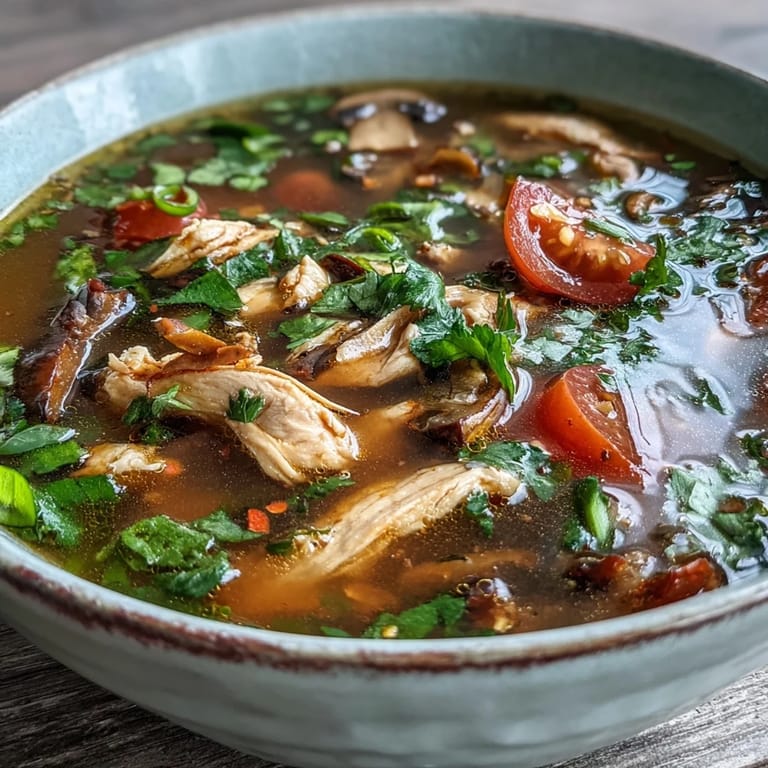
 There's a quiet moment right before you serve Tom Yum when the steam rises and you can see the cilantro floating on top, the lime wedge catching the light, and you realize you've created something that tastes both deeply comforting and exhilaratingly alive. That's when it stops being just soup and becomes a small gift you're giving to yourself or someone else.
About Building Tom Yum Flavor
Tom Yum lives or dies by the trinity of lemongrass, galangal, and makrut lime leaves—these three are non-negotiable. But once you understand what each one brings to the party, you start appreciating how they create a conversation: lemongrass offers floral brightness, galangal adds peppery complexity, and makrut leaves tie it all together with gentle citrus that's different from regular lime. The trick is infusing them into the broth early and gently so their flavors bloom rather than shout.
When You Can't Find Fresh Ingredients
I've made this soup with dried galangal and it still tastes good, though slightly less vibrant—the drying process concentrates the flavor, so use a bit less. Frozen lemongrass exists and works in a pinch; just thaw and smash it the same way. Makrut lime leaves are harder to substitute because they're genuinely unique, but if you're stuck, add extra lime juice and a tiny pinch of lime zest for brightness. The soup won't be identical, but it'll still sing.
Making It Creamy or Adding Twists
The classic version is pure and clear, but sometimes I add a splash of coconut milk or evaporated milk right before serving if I want something richer and more forgiving—it adds body without changing the essential character of the dish. You can also swap the chicken for shrimp to make Tom Yum Goong, keeping everything else the same; the shrimp cooks in just 3 to 4 minutes. Some people add a spoonful of chili paste at the end for extra depth and heat, which changes the texture slightly but adds complexity.
- Coconut milk (60 ml or ¼ cup) stirred in at the very end creates a creamy version while keeping the broth light.
- Shrimp swaps perfectly for chicken and cooks much faster, so watch the timing closely.
- Serve with jasmine rice on the side so you can eat the rice and soup together, letting the soup soak into each grain.
 Save Pin
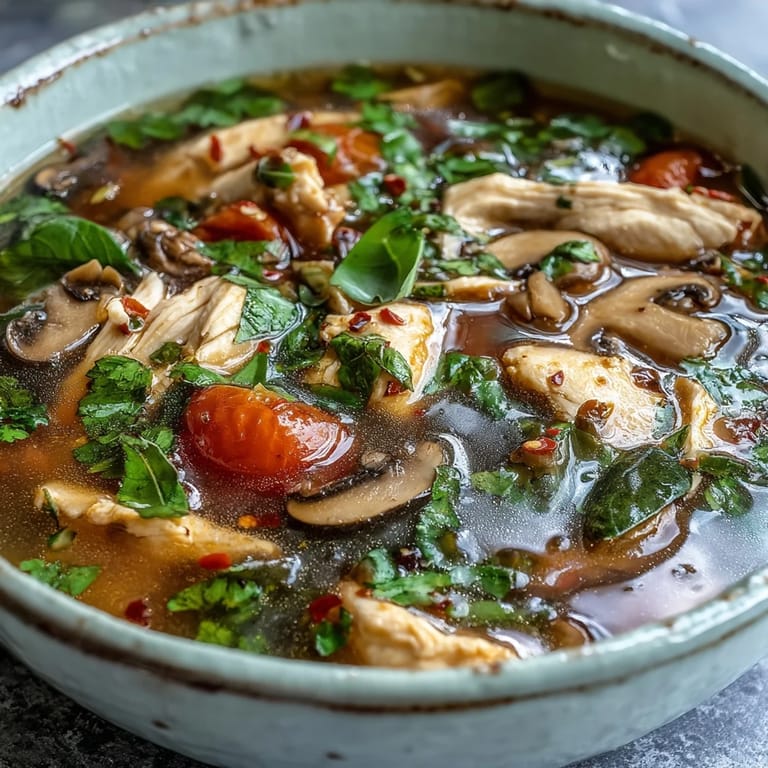
 Tom Yum has taught me that the best soups aren't about complicated techniques but about respecting your ingredients and understanding how they speak to each other. Make this soup and you'll understand why it's remained unchanged for generations.
Recipe Questions
- → Can I use chicken breast instead of thighs?
Yes, chicken breast works well in this soup. Thighs provide more flavor and stay tender, but breast meat is a leaner alternative. Slice thinly and avoid overcooking to keep it moist.
- → What can I substitute for galangal?
Fresh ginger can substitute for galangal, though it has a milder, less citrusy flavor. Use the same amount and bruise it well to release the aromatics into the broth.
- → How do I adjust the spice level?
Control heat by adjusting the number of birds eye chilies. Start with 2 chilies for mild heat, or use up to 6 for very spicy. Remove seeds to reduce intensity without losing flavor.
- → Can I make this soup ahead of time?
The broth can be prepared ahead and refrigerated for up to 3 days. Add chicken and vegetables when reheating to prevent overcooking. Add fresh lime juice and herbs just before serving for best flavor.
- → What makes Tom Yum different from other Thai soups?
Tom Yum is characterized by its distinctive hot and sour flavor profile, combining lemongrass, galangal, lime leaves, and chilies. Unlike coconut-based soups, it features a clear, intensely aromatic broth.
- → Can I add coconut milk to this soup?
Yes, adding 60 ml of coconut milk or evaporated milk creates Tom Yum Nam Khon, a creamy variation. Stir it in just before removing from heat for a richer, milder version.